
Isha Prayer: How to Perform It, Its Timing, Rakats & Virtues
The Isha prayer is the fifth and final obligatory daily prayer in Islam, performed after nightfall. It consists of 4 fard (obligatory) rakats, along with Sunnah and witr prayers totaling up to 13 rakats. Its time begins when the red twilight disappears from the sky after Maghrib and extends until just before Fajr.
The Quran Bliss Academy Editorial Team created this comprehensive guide, with certified Quran and Islamic Studies educators with more than a decade of experience teaching non-Arab Muslims around the world.
What Is the Isha Prayer and Why Does It Matter?
Five times a day, Muslims around the world pause whatever they are doing and turn toward Allah in prayer. Each of those five prayers carries its own moment in the day, and Isha closes the cycle. It is the seal on a Muslim’s day, a moment of surrender and gratitude before rest. For anyone learning the daily obligatory prayers as part of their Islamic practice, Isha is both a completion and a spiritual anchor.
Its Place Among the Five Daily Prayers
Salah, or daily prayer, is the second pillar of Islam and one of the most defining acts of worship for a Muslim. The five prayers, Fajr, Dhuhr, Asr, Maghrib, and Isha, each mark a distinct point in the daily cycle. Isha is the last of these, performed at night after the sky has fully darkened, and the glow of sunset has vanished.
Understanding where Isha fits within salah in Islam helps a Muslim appreciate not just its mechanics but its meaning. It is not just a routine obligation; it is the fifth conversation with Allah in a single day.
The Spiritual Significance of Ending Your Day with Salah
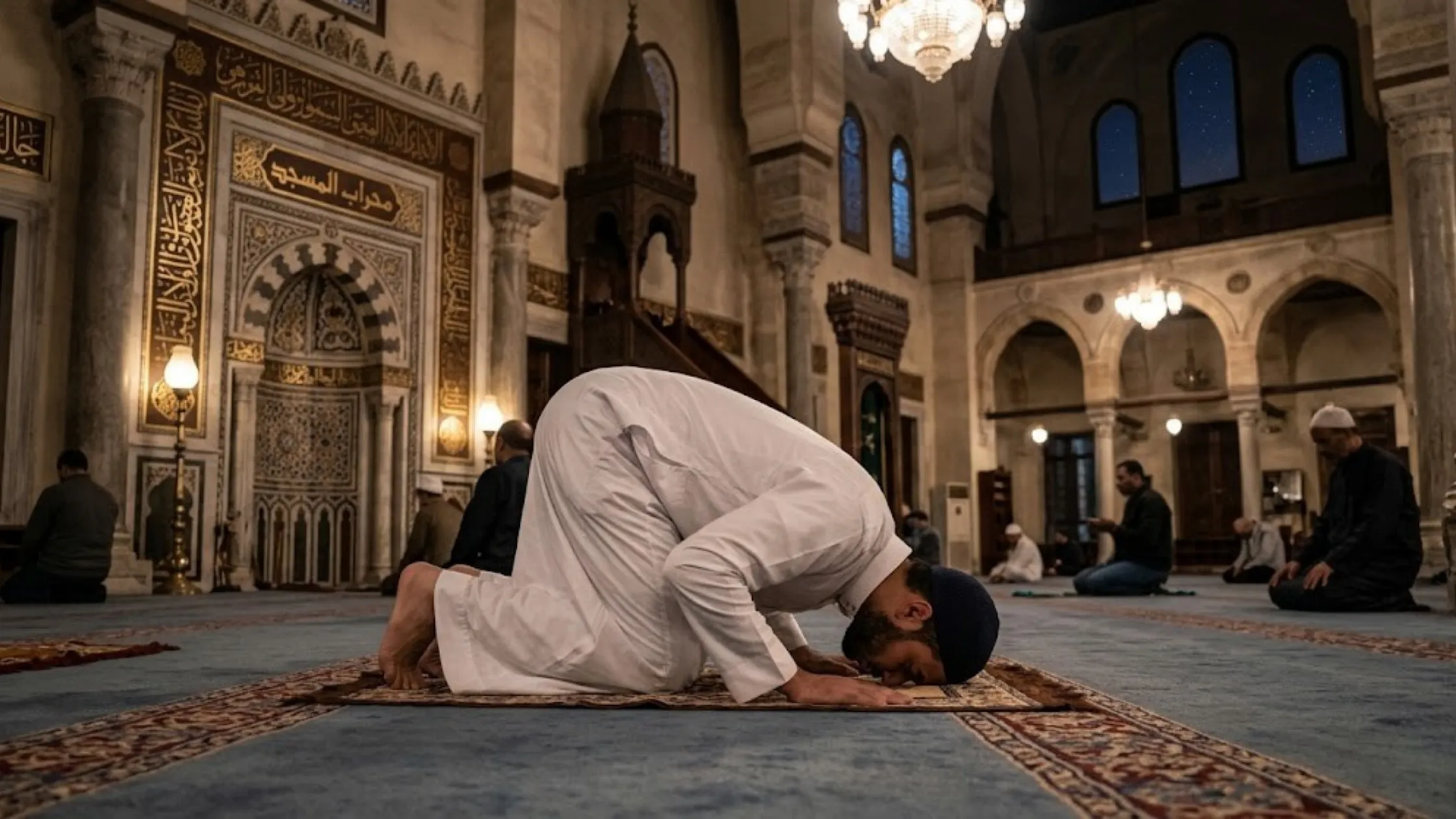
After a long day filled with work, family commitments, and daily responsibilities, Isha prayer offers a unique opportunity to reconnect with Allah in a moment of peace and reflection. Choosing to pray Isha after a busy day is a powerful act of devotion and dedication.
- Scholars often describe Isha as a test of sincerity because it requires commitment when energy is low and rest feels more appealing.
- Unlike prayers performed earlier in the day, Isha is offered when the body seeks sleep, making it a meaningful expression of faith.
- Many students at Quran Bliss Academy from more than 40 countries have shared that Isha became their favorite prayer.
- The reason many love Isha is that it feels like a private and personal conversation with Allah before the world becomes quiet.
- It provides a peaceful moment for reflection, gratitude, and spiritual connection at the end of the day.
- The Arabic word Isha (عِشَاء) comes from a root that refers to evening or nightfall.
- The name perfectly reflects the nature of this prayer, which is associated with stillness, tranquility, and the beginning of the night.
When Is the Isha Prayer Time?
Not every Muslim lives near a mosque with a loud adhan, and not every city displays accurate prayer times on its screens. Knowing how to determine Isha’s time yourself, from its start to its end, gives you the confidence to pray correctly wherever you are in the world.
When Does Isha Begin? (After Maghrib)
Isha time begins when the red twilight (shafaq) disappears from the western sky after sunset. This typically occurs between 60 and 90 minutes after Maghrib, depending on your location and the season. In many cities, this coincides roughly with the full onset of darkness.
The Prophet ﷺ described this timing clearly. The hadith recorded in Sahih Muslim states:
عَنْ عَبْدِ اللَّهِ بْنِ عَمْرٍو أَنَّ رَسُولَ اللَّهِ ﷺ قَالَ: وَوَقْتُ صَلَاةِ الْعِشَاءِ إِلَى نِصْفِ اللَّيْلِ الْأَوْسَطِ
Abdullah ibn Amr reported that the Messenger of Allah ﷺ said: ‘The time of Isha is until the middle of the night.’, Sahih Muslim, Hadith No. 612
When Does Isha End? (Before Midnight, Scholarly Views)
Most scholars of the four major madhabs (Hanafi, Maliki, Shafi’i, and Hanbali) agree that the preferred time for Isha ends at the middle of the night, calculated as the midpoint between Maghrib and Fajr. Praying after this point is still valid but is considered makruh (disliked) by many scholars, unless there is a genuine excuse.
The absolute deadline for Isha is just before the Fajr adhan. So while delaying is permitted in necessity, the best practice is to pray Isha within the first half of the night.
Prayer | Start Time | End Time | Notes |
Isha | After Maghrib ends and the red twilight disappears from the sky | Before true midnight (preferred) or before Fajr (permissible) | Best performed during the first half of the night |
Preferred End Time | — | True midnight (the midpoint between Maghrib and Fajr) | Considered the preferred ending time by the majority of scholars |
Can You Combine Isha with Maghrib?
Yes, Islam allows combining Maghrib and Isha prayers in certain situations such as travel, illness, or genuine hardship.
Using the expression astaghfirullah after prayer is also a known sunnah, as seeking forgiveness after worship is encouraged.
How Many Rakats Is the Isha Prayer?
One of the most frequently asked questions among new Muslims and beginners is the exact structure of Isha, how many rakats are obligatory, and which are recommended. The confusion is understandable, because Isha has more components than most other prayers. Here is a clear, honest breakdown.
Type | Rakats | Mandatory? | Notes |
Sunnah Mu’akkadah (Before) | 4 | Highly Recommended | Follows the Prophet’s ﷺ regular practice before the obligatory prayer. |
Fard (Obligatory) | 4 | Yes, Mandatory | The core obligation of Isha prayer and must not be missed. |
Sunnah Mu’akkadah (After) | 2 | Highly Recommended | Follows the Prophet’s ﷺ regular practice after the obligatory prayer. |
Witr | 3 | Highly Recommended | Considered Wajib by some scholars; should not be neglected without a valid reason. |
Nafl (Optional) | 2 | Optional | Additional voluntary prayer for extra reward. |
Total | Up to 13 | — | Includes all recommended and optional units of prayer. |
The Witr prayer, performed after Isha, is considered Wajib (obligatory) according to the Hanafi school and highly recommended Sunnah by others. Most scholars strongly discourage missing it. It consists of 3 rakats and includes a special supplication called Dua al-Qunoot in the third rakat.
How to Perform the Isha Prayer Step by Step?
Every prayer in Islam follows the same essential structure, but Isha has specific details, particularly around which rakats are recited aloud and which are silent. Walking through each step clearly is the best way to ensure your prayer is correct and complete.
Step 1: Purification (Wudu)
- Before any prayer, purification before prayer (wudu) is a prerequisite. Without it, the prayer is invalid.
- Wudu involves washing the hands, mouth, nose, face, arms up to the elbows, wiping the head, and washing the feet up to the ankles, each action performed three times.
- If you already have wudu from a previous prayer and have not broken it, you may proceed directly.
Step 2: Facing the Qibla & Making Niyyah
- Stand facing the Qibla, the direction of the Kaaba in Mecca.
- Make your intention (niyyah) in your heart that you are about to pray Isha.
- The intention does not need to be spoken aloud, though some scholars recommend it for clarity.
- Then raise your hands to the level of your earlobes and say: Allahu Akbar (تكبيرة الإحرام); this is the opening takbir that begins the prayer.
Step 3: The First Two Rakats (Recited Aloud)
- In Isha, the first two fard rakats are recited aloud (jahr).
- This means you recite Surah Al-Fatiha and a surah from the Quran in a voice audible to yourself and those nearby.
- In congregation, the imam recites aloud, and the followers listen silently.
- Each rakat includes: opening Surah Al-Fatiha, an additional surah, ruku (bowing) with the tasbeeh “Subhana Rabbiyal Azeem” three times, i’tidal (standing upright), two sajdahs with “Subhana Rabbiyal A’la” three times each, and a brief sitting (jalsah) between them. After the second rakat, sit for the first tashahhud.
Step 4: The Last Two Rakats (Silent Recitation)
- The third and fourth rakats are performed silently (sirr); only Surah Al-Fatiha is recited, without an additional surah.
- This is the standard format for the later rakats of Dhuhr, Asr, and the last two of Isha.
- In Arabic, performing these silently is known as the isha prayer in Arabic method of sirr recitation, preserving the distinction between the audible and silent components of the prayer.
Step 5: Tashahhud, Salawat & Tasleem
- After the fourth rakat, remain seated for the final tashahhud.
- Recite the full At-Tahiyyat, then send salawat on the Prophet ﷺ (Allahuma Salli ala Muhammad…).
- Finally, turn your head to the right and say “Assalamu Alaikum wa Rahmatullah,” then to the left with the same phrase.
- This is the Tasleem, which concludes the fard prayer.
Step 6: Sunnah & Witr Prayers After Isha
- After completing the 4 fard rakats, pray the 2 sunnah mu’akkadah rakats; these are silent prayers with the same structure as the later fard rakats.
- Then, before sleeping, perform the witr after Isha, 3 rakats that conclude the night with a supplication to Allah.
- Many Muslims also recite specific adhkar (remembrances) after Isha, including saying subhanallah 33 times, alhamdulillah 33 times, and Allahu Akbar 34 times, following the well-known Sunnah of Fatimah (RA).
The Virtues and Benefits of Isha Prayer
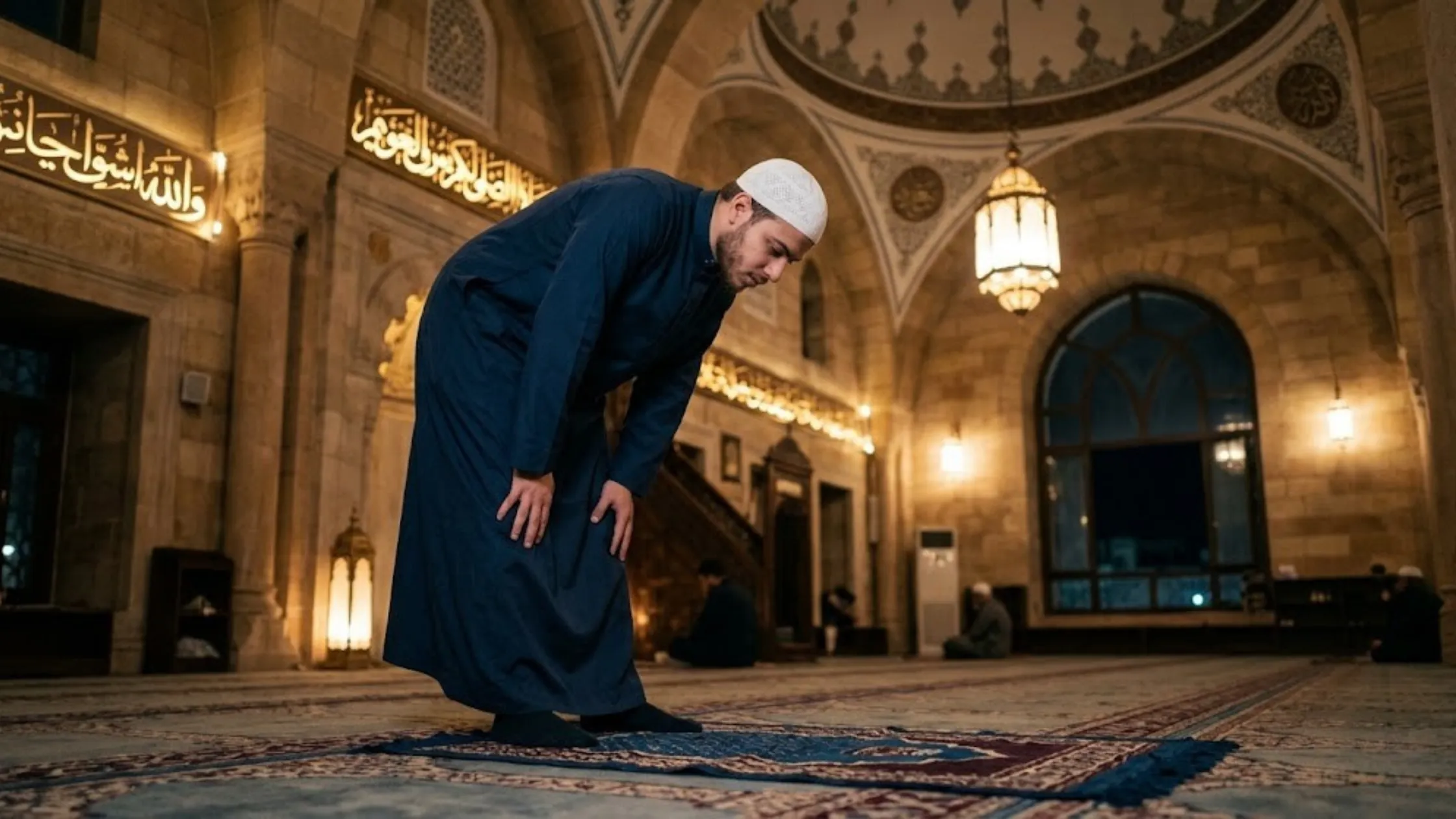
Isha prayer is more than the final prayer of the day—it is a special opportunity to end the night with worship, gratitude, and remembrance of Allah.
- Reward Equal to Half a Night of Worship: Whoever prays Isha in congregation receives the reward of spending half the night in prayer, according to an authentic hadith.
- Opportunity to Earn the Reward of a Full Night: Praying both Isha and Fajr in congregation carries the reward of worshipping throughout the entire night.
- A Sign of Sincerity and Commitment: Performing Isha despite tiredness and daily responsibilities demonstrates dedication and faithfulness to Allah.
- A Peaceful End to the Day: Isha allows believers to conclude their day with worship instead of distractions, bringing a sense of spiritual closure before sleep.
- Strengthens the Connection with Allah: The quiet atmosphere of the evening creates an ideal moment for reflection, gratitude, and drawing closer to Allah.
- Promotes Inner Calm and Tranquility: Ending the day with prayer helps settle the heart, reduce worries, and encourage a more peaceful state of mind.
- Encourages Consistency in Worship: Regularly performing Isha helps build discipline and reinforces the habit of maintaining the five daily prayers.
- Brings Blessings to the Night: Beginning the night with obedience and remembrance of Allah allows a believer to rest with a heart that is spiritually fulfilled.
Tips for Staying Consistent with Isha Prayer
Learning how to pray Isha is important, but maintaining it consistently every night is where the real reward lies. Since Isha comes at the end of a busy day, many people struggle with tiredness, distractions, or simply forgetting. The key to consistency is creating simple habits that make prayer a natural part of your evening routine rather than an afterthought.
Practical Tips to Stay Consistent with Isha
- Create a Fixed Prayer Routine: Try to pray Isha at the same time each night instead of postponing it until bedtime.
- Link Isha to an Existing Habit: Pray immediately after a regular activity such as dinner, finishing work, or preparing for bed.
- Prepare Your Prayer Space in Advance: Keep your prayer mat ready and ensure your prayer area is clean and accessible.
- Avoid Late-Night Distractions: Limit unnecessary screen time, social media scrolling, or activities that may cause you to delay prayer.
- Set Prayer Reminders: Use prayer apps, alarms, or notifications to help you stay aware of Isha time.
- Pray Before Feeling Too Tired: Delaying Isha until the very end of the night often increases the risk of missing it.
- Remember the Reward: Reflect on the immense rewards promised for praying Isha, especially in congregation.
Start Your Isha Prayer Journey with Quran Bliss Academy
Learning to pray correctly is one of the most important steps a Muslim can take, and it is never too late to begin. At Quran Bliss Academy, our certified scholars and Quran teachers have helped thousands of students across the globe understand their prayers, perfect their recitation, and build a consistent prayer life.
Whether you are a new Muslim learning the isha prayer for the first time or a seasoned practitioner looking to refine your practice, our online courses are designed to meet you exactly where you are. Book your free trial session today and take the next step on your journey toward Allah.
The Isha prayer is far more than the last task before sleep; it is an invitation to end your day in the company of Allah. From its timing that begins with nightfall, to its 4 obligatory rakats, to the witr that seals the night, every part of Isha carries meaning and reward.
Frequently Asked Questions:
Isha begins when the red twilight disappears after Maghrib, typically 60–90 minutes after sunset. The preferred time ends at the middle of the night (midpoint between Maghrib and Fajr), and the absolute deadline is just before the Fajr adhan.
The obligatory portion (Fard) is 4 rakats. When including all recommended prayers—4 sunnah before, 2 sunnah mu’akkadah after, and 3 witr—the total number of rakats performed can be up to 13.
Praying Isha after midnight is valid but is generally considered disliked (makruh) because the preferred time window ends at the midpoint of the night. However, if you have a genuine excuse such as travel, illness, or unavoidable work, the prayer is still accepted, and the obligation is fulfilled.
In the 4 fard rakats, the first two are recited aloud (jahr), including Surah Al-Fatiha and an additional surah. The third and fourth rakats are performed silently (sirr), where only Surah Al-Fatiha is recited.
Praying Isha in congregation grants the reward of having spent half the night in voluntary prayer. If a Muslim prays both Isha and Fajr in congregation, they receive the reward equivalent to having prayed the entire night. What time is Isha prayer?
How many rakats is Isha prayer?
Can I pray to Isha after midnight?
What is recited aloud in Isha prayer?
What is the reward of praying Isha in congregation?


Islamic Studies Course
for Adults
Deepen your understanding of Islam’s teachings.
Learn More
The 5 Pillars of Islam
Understand the fundamental principles of Islamic faith and practice.
Learn More