

Maghrib Prayer: Meaning, Time, Rakats & Step-by-Step Guide for Every Muslim
Maghrib is the 4th of the 5 daily prayers in Islam. It begins immediately after sunset and must be completed before the red twilight disappears from the horizon.
It consists of 3 Fard (obligatory) rakats, followed by 2 Sunnah Mu’akkadah rakats, and optionally 2 Nafl rakats.
The Maghrib window is the shortest of all five prayer times, typically 60 to 90 minutes. This guide covers everything: what Maghrib means, when to pray it, how many rakats to perform, and the full step-by-step method.
What Is Maghrib Prayer?
Before diving into the practical steps and timing, we must first establish a solid understanding of this prayer’s spiritual and linguistic background. This foundational knowledge will enrich your appreciation of Maghrib’s profound role in the life of a Muslim.
The Meaning of “Maghrib” in Arabic
The word “Maghrib” (مغرب) comes from the Arabic root meaning “west” or “sunset.” It reflects the direction of the setting sun and symbolically marks the end of the day’s active journey. In Islamic usage, it refers specifically to the fourth of the five daily prayers.
Its Place Among the 5 Daily Prayers
Maghrib is the fourth prayer of the day, following Fajr, Dhuhr, and Asr, and preceding Isha. Understanding Salah as a whole, its role in a Muslim’s faith and daily life, helps you appreciate why each prayer has its own distinct spiritual character. For a deeper foundation, explore and define the 5 pillars of Islam to see how prayer fits into the broader structure of Islamic worship.
Why It Marks the Transition from Day to Night
Maghrib serves as a spiritual boundary, a deliberate pause between the bustling day and the quiet evening. For Muslims, it is a reminder that time belongs to Allah, and every transition in the day is an opportunity for gratitude and remembrance. To understand how this prayer sits within the complete system of Islamic worship, read about salah in Islam and what makes each of the five prayers unique.
When Is Maghrib Prayer Time?
Moving from the spiritual significance of the prayer, it is essential to understand the specific temporal boundaries that define its window. Mastering these timings ensures that your worship is performed with the required promptness and precision.
Start Time: Immediately After Sunset
Maghrib begins the moment the sun fully sets below the horizon. This is determined by the complete disappearance of the sun’s disk, not merely when it begins to lower. There is no waiting period; the prayer should begin right away.
End Time: When Red Twilight Disappears
The Maghrib window closes when the red twilight (shafaq ahmar) on the western horizon disappears, typically 60 to 90 minutes after sunset, depending on the season and geographic location.
How Long Is the Maghrib Window?
This is the shortest prayer window of the day. Most scholars agree it lasts between 60 and 90 minutes. Delaying Maghrib beyond this window without a valid excuse is discouraged and considered a serious matter by Islamic scholars.
Sunni vs. Shia Timing Differences
In Sunni Islam, Maghrib begins immediately after sunset. In Shia practice, some scholars recommend a brief delay until the eastern sky begins to darken to confirm that full sunset has occurred. Both traditions agree that the prayer must be completed before the red twilight on the horizon disappears.
Using Prayer Timetables & Apps
You can find accurate Maghrib times for your city through apps such as Muslim Pro, Athan Pro, or websites like IslamicFinder. These tools use your GPS location to calculate prayer times based on local sunset data, making it easy to stay on schedule wherever you are.
How Many Rakats in Maghrib Prayer?
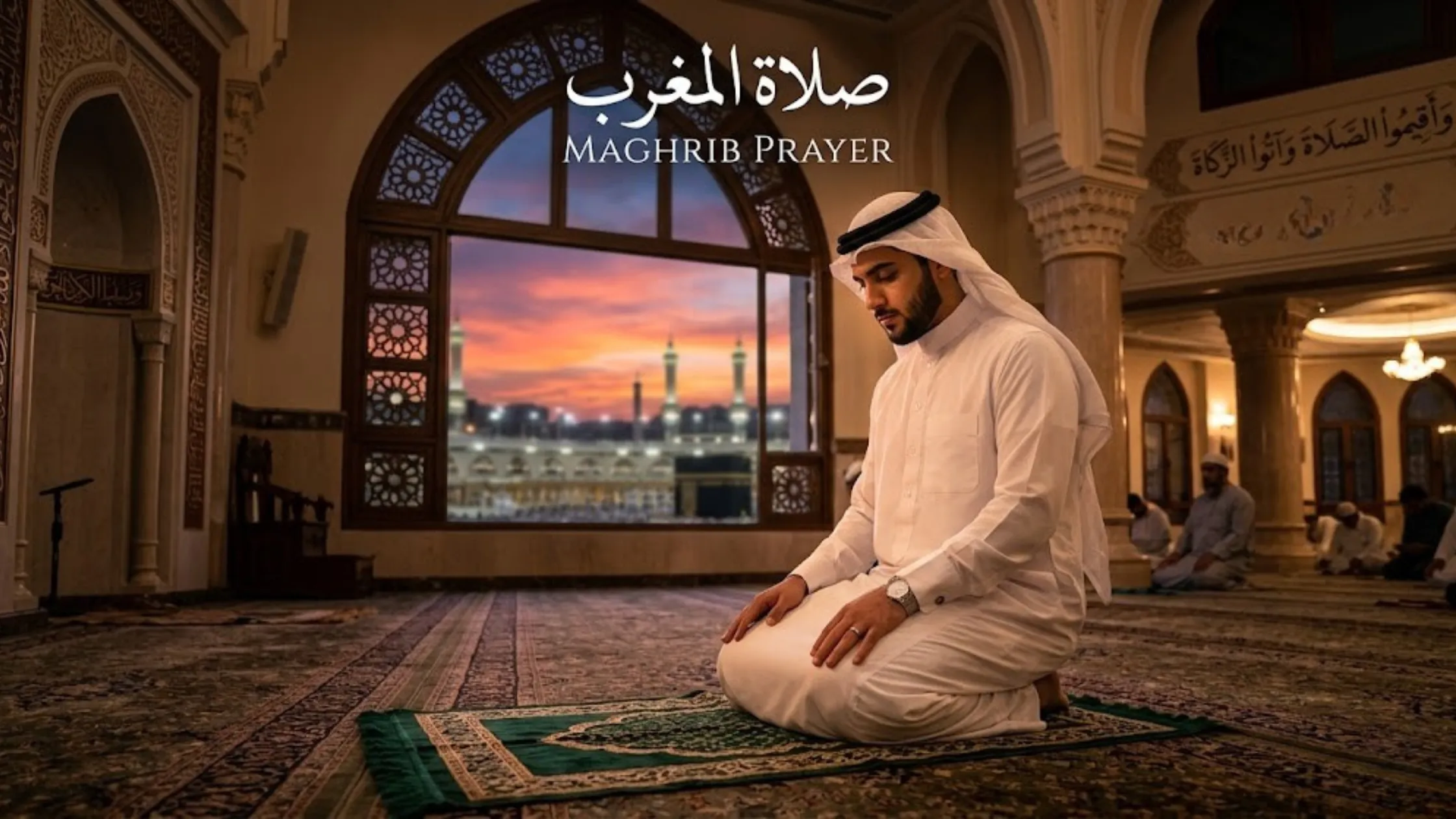
Knowing the correct number of rakats is essential before you begin. Maghrib has a clear, fixed structure with three distinct types of rakats.
3 Fard Rakats (Obligatory)
The 3 Fard rakats are the core of Maghrib prayer, obligatory for every Muslim. They must be prayed with full attention and in the correct order. Skipping them without a valid reason is considered a major sin in Islam.
2 Sunnah Mu’akkadah (Highly Recommended)
These 2 rakats are performed immediately after the Fard. They were regularly practised by the Prophet Muhammad ﷺ and are strongly recommended for every Muslim. Neglecting them habitually without reason is considered blameworthy by Islamic scholars.
2 Nafl Rakats (Optional)
Two optional Nafl rakats may be prayed after the Sunnah. While not obligatory, they carry extra reward and help deepen one’s connection with Allah. Many devout Muslims include them as part of their regular Maghrib routine.
Comparison Table: Fard vs Sunnah vs Nafl
Prayer Type | Rakats | Ruling | If Missed |
Fard | 3 | Obligatory | Sin if missed without a valid reason |
Sunnah Mu’akkadah | 2 | Highly Recommended | Considered blameworthy if regularly skipped |
Nafl | 2 | Optional | No sin if missed, but performing it brings reward |
How to Perform Maghrib Prayer Step by Step?
Performing Maghrib prayer correctly begins with proper preparation, sincere intention, and following each rakat with focus and devotion. Understanding the steps not only helps ensure the prayer is valid but also strengthens your connection with Allah. Just as the meaning of shahadah in Islam reflects a conscious commitment to faith, every stage of Salah represents an act of worship carried out with sincerity and mindfulness.
Follow these steps to perform Maghrib prayer:
- Prepare with Wudu and Face the Qibla
Perform Wudu (ritual purification) and ensure you are facing the Qibla, the direction of the Kaaba in Makkah. Choose a clean and distraction-free place for prayer. - Make Your Niyyah (Intention)
Form the intention in your heart to pray Maghrib. There is no requirement to say it aloud. This sincere intention reflects the spiritual commitment found in the meaning of shahadah in Islam, where faith begins with conscious devotion to Allah. - Pray the First and Second Rakats (Recited Aloud)
Start each rakat with Takbir (“Allahu Akbar”), recite Surah Al-Fatiha followed by another short Surah, perform Ruku and two Sujood, then sit for the first Tashahhud after completing the second rakat. - Complete the Third Rakat (Recited Silently)
In the third rakat, recite only Surah Al-Fatiha silently. After the two Sujood, remain seated for the final Tashahhud. - Recite Tashahhud and End with Salam
Complete the final Tashahhud and Salawat (Ibrahimiyya), then conclude the prayer by turning your head to the right and left while saying: “As-salamu alaykum wa rahmatullah.” - Perform the Two Sunnah Rakats
After the 3 Fard rakats, pray 2 Sunnah rakats individually. These follow the normal two-rakat prayer structure and provide additional spiritual reward.
Duas After Maghrib Prayer
After completing the prayer, the Prophet ﷺ regularly recited specific phrases of remembrance (adhkar). Begin with 33 repetitions of subhanallah, meaning, “Glory be to Allah.” Understanding the depth of this glorification transforms the recitation from habit into a heartfelt act of worship.
Next, recite alhamdulillah 33 times, “All praise is due to Allah.” This expression of gratitude at sunset is one of the most beloved acts to Allah, acknowledging His blessings at the close of the day.
Complete the set with astaghfirullah, repeated 3 to 33 times as an act of seeking forgiveness. The moments immediately after prayer, when the heart is open, are among the most powerful times to ask for Allah’s mercy.
The Virtue of Making Dua at Sunset
Islamic tradition describes sunset as one of the blessed times for personal supplication. The Prophet ﷺ encouraged holding firmly to dua after each prayer, particularly at the transitions of the day, and Maghrib, bridging daylight and night, is the most pronounced of these transitions.
“أَقِمِ الصَّلَاةَ لِدُلُوكِ الشَّمْسِ إِلَى غَسَقِ اللَّيْلِ وَقُرْآنَ الْفَجْرِ”
“Establish prayer from the decline of the sun until the darkness of the night, and [observe] the Quran of dawn.”
(Surah Al-Isra, 17:78)
Spiritual Benefits of Maghrib Prayer
A “Boundary Ritual” Between Day and Night
Maghrib acts as a built-in reset, a moment where you mentally close the chapter of the day and open the evening with intention. This psychological “boundary ritual” is one of Islam’s most powerful gifts: structured pauses throughout the day that prevent spiritual burnout and keep the soul anchored.
Forgiveness of Sins
The Prophet ﷺ described consistent prayer as washing away sins the way flowing water washes away dirt. Maghrib, performed faithfully within its time, is a daily opportunity for spiritual renewal, arriving at the end of every day without exception.
“إِنَّ الْحَسَنَاتِ يُذْهِبْنَ السَّيِّئَاتِ ذَلِكَ ذِكْرَى لِلذَّاكِرِينَ”
“Indeed, good deeds do away with misdeeds. That is a reminder for those who remember.”
(Surah Hud, 11:114)
Inner Peace and Stress Relief
The physical movements of prayer, standing, bowing, and prostrating, combined with Arabic recitation, create a meditative state that modern psychology recognises as deeply calming. Learning the meanings behind Islamic phrases and meanings you recite daily transforms prayer from a routine ritual into a truly conscious, healing act.
Strengthening Consistency and Discipline
The brief Maghrib window, narrower than any other prayer, demands promptness. Praying it regularly, especially before eating Iftar or attending to evening plans, builds one of the most valuable habits a Muslim can develop: prioritising the call of Allah above every worldly distraction.
Maghrib Prayer in Ramadan
Breaking the Fast (Iftar) at Maghrib
In Ramadan, Maghrib takes on a uniquely joyful role; it is the prayer that begins with breaking the fast. The Prophet ﷺ recommended breaking the fast first with dates and water, making a brief dua, and then performing Maghrib before the full meal. This sequence ensures the prayer is not delayed and the moment of Iftar is spiritually anchored.
Extra Spiritual Rewards in Ramadan
All acts of worship carry multiplied rewards in Ramadan. Praying Maghrib in congregation at the masjid, making sincere dua at the moment of Iftar, and reciting the post-prayer adhkar with full presence are among the most rewarding acts a Muslim can perform during the holy month. The wallahi meaning and sincerity behind one’s words in supplication at this time carry immense weight, especially when the heart’s earnestness is what elevates worship.
Common Mistakes to Avoid
Delaying Beyond the Time Window
Many Muslims delay Maghrib due to Iftar gatherings, social plans, or simply losing track of time. This is one of the most common and serious mistakes. Scholars emphasise that Maghrib must be prayed within its window, and the rule is simple: pray first, then eat.
Skipping the Sunnah Rakats
Some Muslims complete the 3 Fard rakats and immediately leave the prayer space. The 2 Sunnah rakats that follow are strongly recommended and take only two to three minutes. Habitually skipping them means missing a significant source of reward that the Prophet ﷺ never abandoned willingly.
Rushing Through Rakats Without Khushu’
Speed is not a virtue in prayer. Rushing through Maghrib, moving hastily through ruku, sujood, and recitation without focus, defeats its purpose. The Prophet ﷺ warned against the “pecking” style of prayer, where the prostration is as fast as a bird pecking the ground. Each movement should be deliberate and unhurried.
Tips for Praying Maghrib with Khushu’
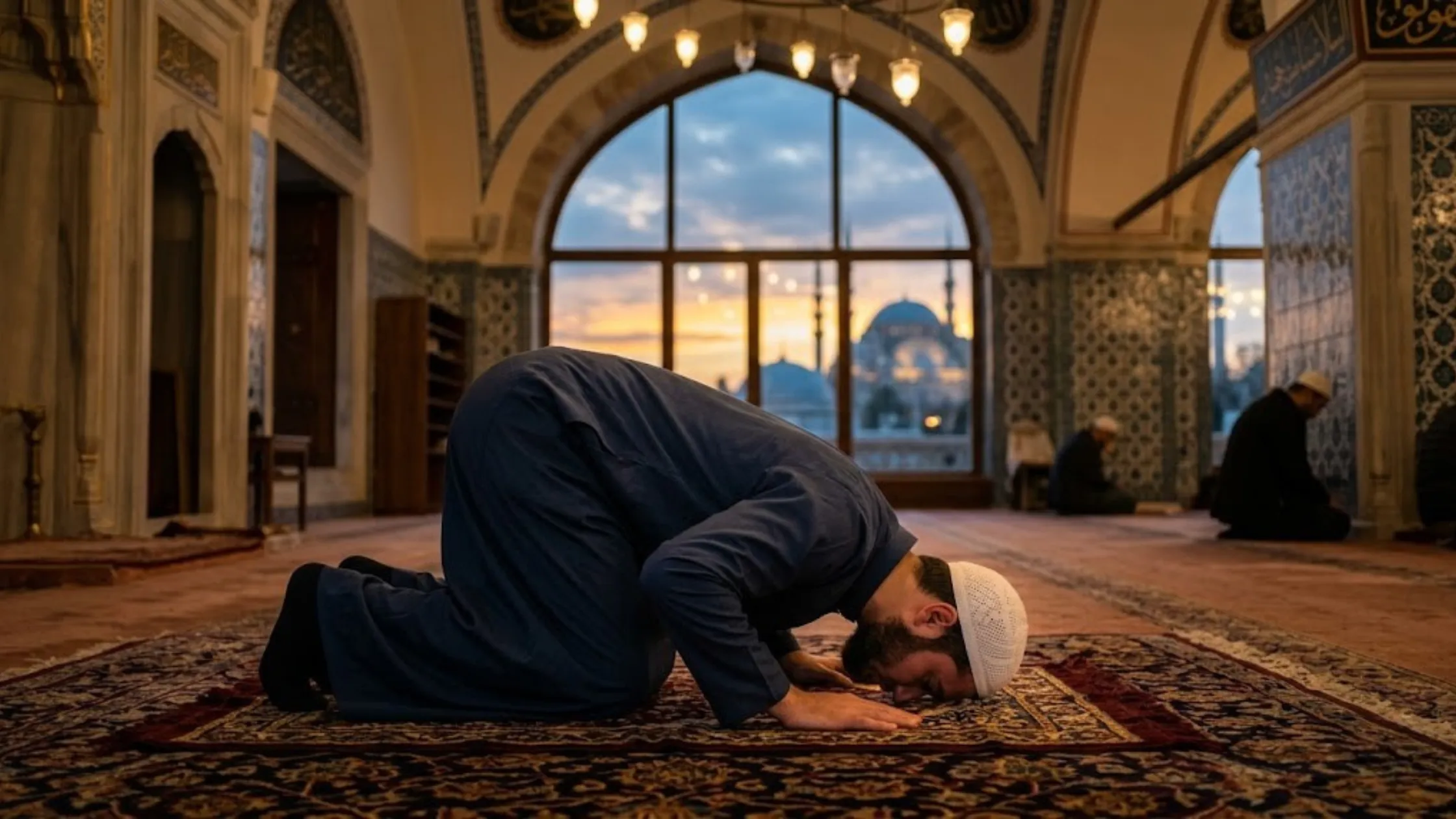
Focus Techniques
Khushu’, deep presence and humility in prayer, is the soul of Salah. A few practical steps that help:
- Choose a clean, quiet space away from screens and noise
- Silence your phone before the Adhan sounds
- Take 30 seconds before the Takbir to settle your mind and recall what you are about to do
- Understand the meaning of Surah Al-Fatiha, every single word you recite in every rakat
- Imagine each prostration as a private moment between you and Allah alone
Praying in Congregation vs. at Home
Praying in congregation (Jama’ah) at the mosque carries 27 times the reward of praying alone, according to a well-known Hadith narrated in Sahih Bukhari and Sahih Muslim. If the mosque is accessible, prioritise Jama’ah for Maghrib; the communal energy and shared focus deepen the experience significantly.
If you pray at home, that is entirely valid. Ensure the space is clean, face the Qibla accurately, and minimise interruptions. Some Muslims find praying at home allows for slower, more reflective recitation, which is equally valuable when done with focus.
Maghrib prayer is more than a ritual; it is a daily invitation to pause, reconnect, and return to what truly matters. By understanding its timing, mastering its rakats, and praying with awareness and khushu’, you turn five minutes at sunset into one of the most meaningful moments of your day. Start today, even with imperfection. Consistency is what Allah loves most.
May your Maghrib prayers be accepted, your duas answered, and your evenings filled with peace. Ameen.
Whether you are learning to pray for the first time or working to strengthen a habit you already have, Maghrib is one of the most beautiful places to start. It is short, it is clear in its structure, and it arrives every single day at the most breathtaking moment of the sky. Use this guide as your reference, and return to it whenever you need a reminder.
Explore the other articles on this site for a deeper understanding of Islamic prayer, Arabic phrases, and Quranic teachings, and build a practice that goes far beyond the surface.
FAQ, Maghrib Prayer
Maghrib time ends when the red twilight (shafaq ahmar) disappears from the western horizon, typically 60 to 90 minutes after sunset, depending on the season and your location. Some apps and local masjids publish this (Maghrib end time) separately to help you track it precisely.
Yes. Islam permits Jam’ (combining prayers) during travel. You may pray Maghrib and Isha together, either advancing Isha to Maghrib time (Jam’ Taqdim) or delaying Maghrib to Isha time (Jam’ Ta’khir). This concession applies to genuine travel and is a mercy from Allah.
If you miss Maghrib unintentionally, due to sleep, illness, or forgetfulness, make it up (Qada) as soon as you remember. Perform it in full, including the Sunnah rakats. Intentional, unjustified abandonment is a serious matter that requires sincere repentance and is not simply (made up) by a future Qada.
Yes, praying alone (Munfarid) is valid and fully accepted. Congregation at the masjid carries a greater reward, but praying alone at home is perfectly permissible. What matters most is that the prayer is performed within its time, with proper Wudu and attention.
Surah Al-Fatiha is recited in every rakat. For the additional recitation in the first two rakats (aloud), shorter surahs from Juz Amma are most commonly used: Al-Ikhlas (112), Al-Kafirun (109), Al-Falaq (113), and An-Nas (114). The Prophet ﷺ also recited At-Tur and Al-Mursalat in Maghrib on specific occasions. When exactly does Maghrib time end?
Can I combine Maghrib with Isha when travelling?
What if I miss Maghrib prayer?
Is it OK to pray Maghrib alone at home?
What Surahs are recommended in Maghrib?


Islamic Studies Course
for Adults
Deepen your understanding of Islam’s teachings.
Learn More
The 5 Pillars of Islam
Understand the fundamental principles of Islamic faith and practice.
Learn More