
The difference between recitation and tajweed is that recitation focuses on reading the Quran correctly, while tajweed focuses on pronouncing each letter accurately according to specific rules.
This confusion often leads to inconsistent practice habits, especially when learners move between informal reading and structured instruction. Scholars clarify the Distinction Between Recitation and Tajweed to separate basic reading from regulated articulation and phonetic rules.
When these terms are blended, students may overlook obligatory corrections or treat optional refinements as essential.
What Is the Difference Between Recitation and Tajweed?
Understanding the Distinction Between Recitation and Tajweed helps learners separate basic correctness from the rules that preserve articulation, timing, and phonetic clarity in Quran reading.
- Recitation aims to read the text accurately, without skipping, adding, or changing words.
- Tajweed applies specific rules such as elongation, nasalization, and the rules of noon and meem.
- Recitation can be fluent yet still contain hidden pronunciation errors.
- Tajweed protects letter identity by teaching precise makharij (points of articulation).
- Recitation includes pacing styles, while tajweed governs sound quality across all speeds.
What Does “Recitation” Mean in Quran Reading?
Recitation in Quran reading means verbal delivery of the revealed words of the learn quran online with attention to accuracy, rhythm, and attentiveness.
It includes reading from the mushaf or from memory and can be practiced in different settings, including educational settings where teachers focus on fluency and correctness.
- Recitation requires the correct sequence of verses and preservation of every word and vowel.
- Learners may read silently or recite aloud, softly, depending on context and learning goals.
- It includes measured reading, as Allah says: “And recite the Quran with measured recitation.” (Quran 73:4)
- It can follow common pacing categories such as slow, moderate, and quick reading styles.
- It supports memorization by reinforcing visual recognition and auditory repetition together.
What Is Tajweed and Why Is It Important in Quran Recitation?
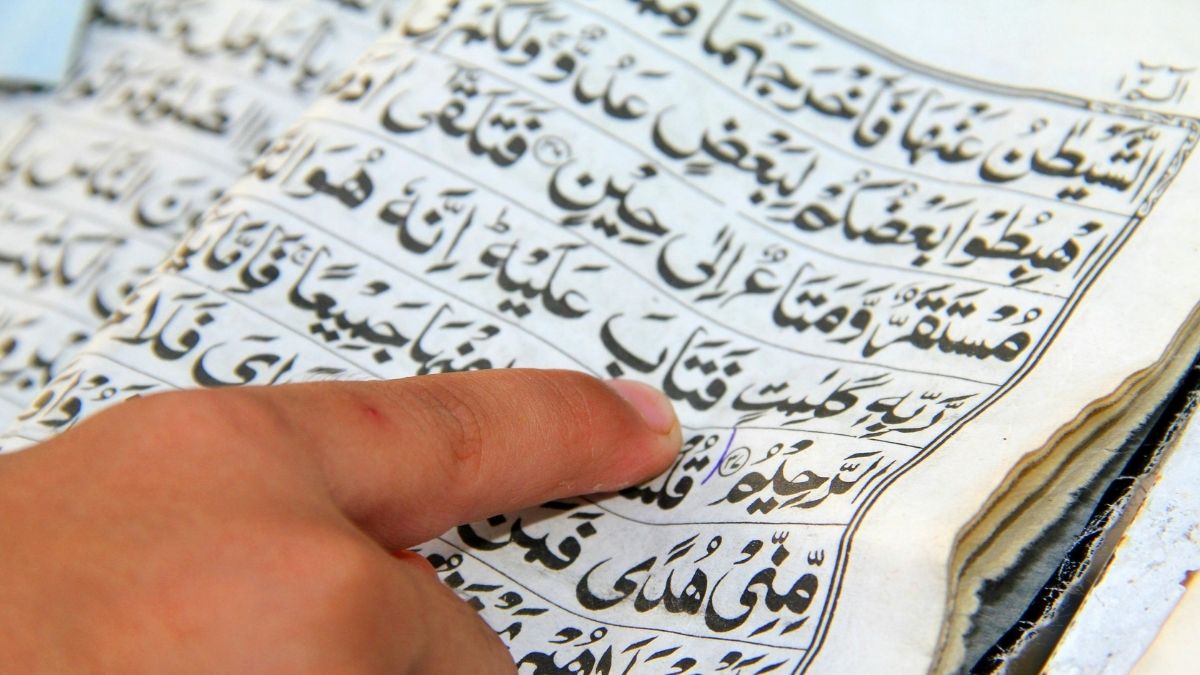
quran tajweed lessons is the science that teaches how to pronounce Quranic letters and words as transmitted, giving each letter its rights and characteristics.
The meaning of tajweed in Islam is tied to preserving the revelation’s recited form, so learners do not unintentionally change meanings through pronunciation mistakes.
- Tajweed teaches makharij and sifat, so letters like س and ص remain distinct.
- It includes the rules of Madd to control stretching and avoid altering word forms.
- It organizes connected-reading rules such as idgham, ikhfa, and iqlab for clarity.
- It prevents common substitution errors, especially for learners influenced by local accents.
- It supports consistent learning through resources like the Tajweed Quran and guided Tajweed Quran lessons.
Key Differences Between Recitation and Tajweed Explained
Recitation describes the act of reading, while tajweed describes the method that governs sound production. Some learners read smoothly but misapply nasalization, elongation, or letter emphasis. Clarifying differences also helps when comparing related terms, including the difference between tarteel and tajweed in study discussions.
Aspect | Recitation | Tajweed |
Main focus | Reading the words correctly | Producing sounds correctly |
Common goal | Fluency and accuracy | Precision and preservation |
Typical errors | Skipping or mixing words | Letter distortion, wrong madd |
Learning tools | Practice reading daily | Rule study and correction |
Is Recitation Possible Without Tajweed Rules?
Yes, recitation is possible without full tajweed mastery because a person can read the written words while still lacking refined rule application.
However, reading without learning core tajweed rules can lead to persistent pronunciation errors, especially in similar letters and long-vowel timing, reinforcing the meaning of tajweed in Islam as preserving accurate pronunciation and recitation.
- Basic recitation may still be valid when words are correct, and the meaning is not altered.
- Skipping rule awareness increases the chance of changing vowels or merging letters incorrectly.
- Some rules are essential for avoiding meaning-changing mistakes, not only for beautification.
- Beginners often benefit from a tajweed Quran with color cues to notice rule locations.
- Teachers usually prioritize common errors first, then expand to advanced rule detail.
How Tajweed Improves Accuracy in Recitation
Tajweed strengthens accuracy by standardizing how letters are articulated and how transitions occur between sounds.
It reduces ambiguity in similar consonants, corrects timing, and improves consistency across different speeds. Many learners develop clarity through guided lessons at Quran Bliss Academy, where correction is linked to specific rule categories.
- It corrects makharij so that throat letters and tongue letters are not confused.
- It stabilizes madd counts, preventing over-stretching or shortening of vowels.
- It manages ghunnah timing to avoid inserting extra sounds into words.
- It teaches stopping rules to avoid changing the meaning through incorrect pauses.
- It supports reliable self-review when learners use structured Tajweed Quran lessons.
Common Mistakes When Reciting Without Tajweed

When learners read without tajweed awareness, mistakes often appear in sound blending, letter heaviness, and stopping rules.
These issues may not be obvious to the reader but are clear to a trained listener. Using organized rule categories helps students diagnose errors and correct them systematically.
- Mixing similar letters, such as ض with د, changes articulation and sometimes meaning.
- Ignoring tafkheem and tarqeeq makes heavy letters sound light or vice versa.
- Ending words incorrectly during waqf can change grammar and intended meaning.
- Applying random elongation disrupts rhythm and can resemble adding sounds.
- Over-nasalization can occur when ikhfa and idgham are not distinguished.
Do Beginners Need Tajweed Before Recitation?
No, beginners do not need a complete tajweed study before starting to recite, because early reading builds familiarity with script, words, and flow.
A balanced approach is to start recitation while learning the most essential tajweed rules in parallel, especially those that protect letter identity and vowel accuracy.
- Start with correct Arabic letters and short vowels before detailed rule terminology.
- Learn essential makharij early to prevent habits that become hard to correct.
- Practice short surahs while adding one rule focus per week, such as the Madd basics.
- Use teacher feedback rather than relying only on self-listening and repetition.
- Introduce more rules gradually, moving from clear errors to subtle refinements.
Practical Examples of Recitation vs Tajweed
Practical comparison helps learners hear the difference between simply reading and reading with rule-based precision. Many classrooms refer to pacing categories like the 3 types of recitation to show how speed changes, while tajweed remains consistent. Examples should focus on sound outcomes rather than theory alone.
- A learner may read “الرحمن” correctly, while tajweed ensures proper ر heaviness and clear ح.
- Recitation may stretch randomly, while tajweed fixes elongation counts in madd letters.
- Recitation may merge sounds casually, while tajweed applies idgham only where required.
- Recitation may stop abruptly, while tajweed teaches waqf, so endings remain correct.
- Recitation may vary in speed, while tajweed rules remain consistent across slow and fast readings.
How to Combine Recitation and Tajweed Effectively
Combining reading practice with rule correction requires a method: recite regularly, then isolate errors and connect them to a named rule.
This approach prevents learners from feeling overwhelmed and makes improvement measurable. Structured study plans often use short daily passages followed by targeted correction.
- Recite a small portion daily, then repeat it while focusing on one rule category.
- Record your reading to detect repeated errors in madd, ghunnah, and heavy letters.
- Study a brief rule summary, then apply it immediately to the same verses.
- Use teacher correction to confirm whether the issue is rule-based or letter-based.
- Keep a checklist of errors to track progress across weeks, not single sessions.
Benefits of Learning Tajweed for Proper Recitation
Learning tajweed supports proper recitation by improving clarity, preserving transmitted pronunciation, and reducing meaning-changing errors. It also strengthens listening skills, because learners begin to recognize correct and incorrect patterns. The Prophet ﷺ said: “The best of you are those who learn the Quran and teach it.” (Sahih al-Bukhari)
- It preserves letter distinction, which is essential for reading without distortion.
- It improves confidence because learners know why a sound is correct.
- It strengthens memorization by linking sound patterns to written patterns consistently.
- It supports respectful delivery, especially in longer readings during prayer and study.
When Should You Start Learning Tajweed?
Tajweed should begin as soon as a learner can recognize letters and read short words, because early correction prevents long-term habits. Starting does not require mastering every chapter of rules at once; it requires consistent guidance and gradual expansion. A structured environment like Quran Bliss Academy helps learners understand these concepts step by step.
- Begin with makharij and basic vowel accuracy before advanced connected-reading rules.
- Introduce common rules in order, such as noon sakinah patterns and simple madd.
- Set a weekly focus so practice stays manageable and measurable.
- Review with a qualified teacher to avoid reinforcing errors through repetition.
- Use a clear learning plan, similar to how students learn the Quran online in guided stages.
Understanding the distinction between recitation and tajweed helps learners identify whether an error involves text accuracy, articulation, or applied rules.
Allah says: “And recite the Quran with measured recitation.” (Quran 73:4) Learners often develop a deeper understanding through structured study environments such as Quran Bliss Academy. Continued, methodical practice with clear objectives supports steady progress in Quran studies.
Frequently Asked Questions:
Is the Distinction Between Recitation and Tajweed important for correct Quran reading?
Yes, it matters because recitation focuses on reading the Quranic words correctly, while tajweed focuses on how each letter is pronounced and connected.
Can I recite the Quran correctly without learning tajweed?
Yes, you can recite with basic correctness if you read the words accurately, but you may still miss important tajweed rules.
What is the meaning of tajweed in Islam in simple terms?
It means giving Quranic letters their proper articulation and characteristics as transmitted by qualified reciters. T he meaning of tajweed in Islam is not only beautification; it is preservation of correct sound. It includes rules such as madd counts, ghunnah timing, and noon-sakinah patterns.
What is the difference between tarteel and tajweed?
Tarteel is a style of measured, unhurried reading, while tajweed is the rule set that governs accurate pronunciation at any speed. A person can read with tarteel but still make tajweed errors, or read faster while still applying tajweed correctly through trained habits and correction.
How can beginners learn both recitation and tajweed without confusion?
Start by learning accurate letters and short vowels, then add one rule focus at a time during daily recitation practice. This approach matches many quran tajweed lessons and helps beginners track progress. Learners who learn the Quran online often benefit from teacher feedback to prevent long-term pronunciation habits.


Quran Recitation
with Tajweed
Master accurate Qur’an recitation with clear Tajweed rules.
Learn More