
Have you ever wondered why Quran reciters sound so smooth and effortless? The secret often lies in a small but powerful concept called leen letters in arabic — the “soft” letters of Arabic that give Quranic recitation its gentle, flowing rhythm.
If you are just starting your Tajweed journey, understanding Leen letters will transform how you read the Quran. This guide breaks everything down — what they are, how they work, and how to practice them step by step.
What Are Leen Letters in Arabic?
Leen letters are two Arabic letters that carry a special, soft sound in the science of Tajweed. They appear in countless words throughout the Quran and play a key role in how recitation flows naturally from one word to the next.
Why Are They Called Soft Letters?
Leen letters are called soft because of the way they feel when you pronounce them correctly.
When Waw (و) or Yaa (ي) appears with a Sukoon after a Fatha, the tongue and mouth move gently without pressing or stressing the sound. Think of it as the difference between stepping firmly and tiptoeing — Leen letters always tiptoe.
Leen Letters in the Quran — Real Examples
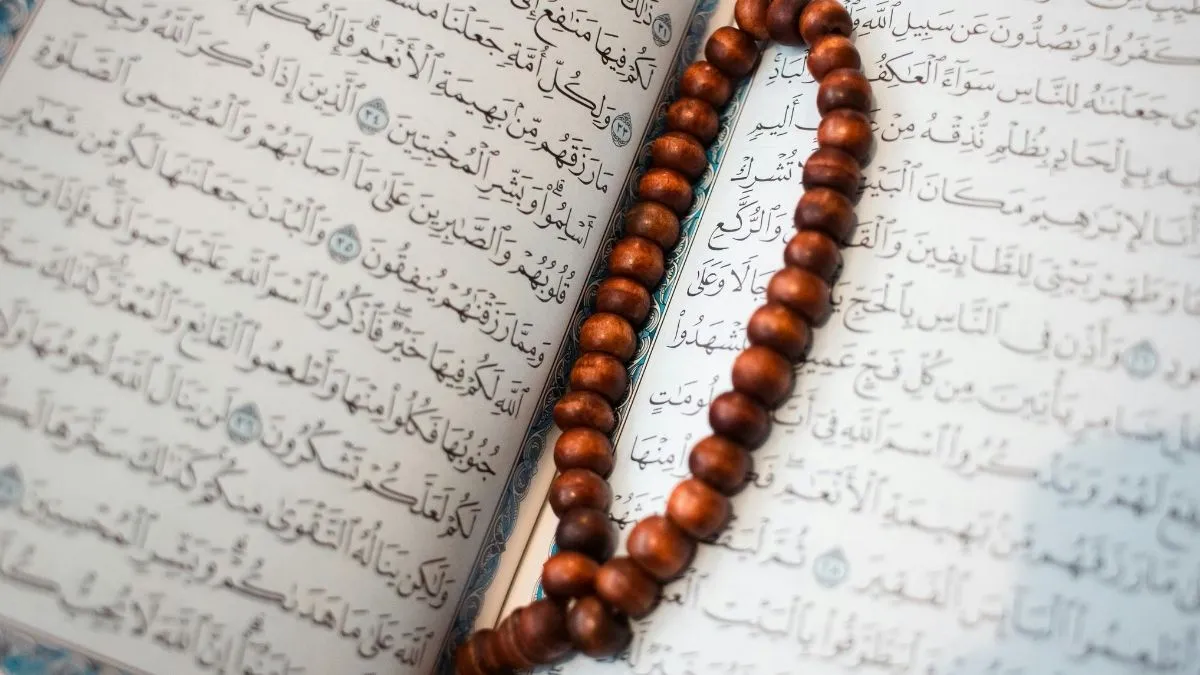
The Quran is filled with Leen letters. Learning to recognize them in real verses will speed up your Tajweed progress significantly. Below are clear, verified examples to get you started.
Examples from Surah Al-Fatiha
Surah Al-Fatiha, the opening chapter of the Quran, contains a perfect example of a Leen letter. Look at the word “خَيْرٌ” (Khayr) — the Yaa (ي) here carries a Sukoon and is preceded by a letter with a Fatha, making it a Leen letter. It is recited softly, without elongation.
Arabic: “الْحَمْدُ لِلَّهِ رَبِّ الْعَالَمِينَ”
English: “All praise is due to Allah, Lord of all worlds.”
Reference: (Surah Al-Fatiha, 1:2)
Examples from Other Surahs (Examples Table)
Here are additional Leen letter examples from across the Quran:
Surah | Word (Arabic) | Leen Letter | Position |
|---|---|---|---|
Al-Baqarah (2:2) | خَيْرٌ (Khayr) | Yaa (ي) with Sukoon | After Fatha on Kha |
Al-Baqarah (2:255) | كُرْسِيُّهُ (Kursiyyuhu) | Yaa (ي) with Sukoon | After Fatha |
Al-Ikhlas (112:1) | قُلْ (Qul) | Waw (و) — conditional | Check vowel context |
Al-Fil (105:1) | أَصْحَابَ الْفِيلِ (Al-Feel) | Yaa (ي) with Sukoon | After Fatha on Fa |
Al-Quraysh (106:1) | لِإِيلَافِ (Li-Ilaafi) | Yaa (ي) with Sukoon | After Fatha |
How Many Soft Letters (Huroof) Are in Arabic and the Quran?
There are exactly two (2) Leen letters in Online Arabic classes for Tajweed — no more, no less. They are:
- Waw (و) — when it has a Sukoon and is preceded by a Fatha
- Yaa (ي) — when it has a Sukoon and is preceded by a Fatha
Both letters appear hundreds of times throughout the Quran. Mastering them is one of the quickest wins for any beginner in Tajweed.
Want to build a strong foundation first? Learn how to Learn Noorani Qaida to understand Arabic letters before diving into Tajweed rules.
The Two Leen Letters — Waw (و) and Yaa (ي)
Let us look at each Leen letter in detail — how to pronounce them, where they come from in the mouth, and what makes them unique.
How to Pronounce Waw as a Leen Letter
When Waw (و) acts as a Leen letter, it is NOT pronounced like the full Waw vowel sound. Instead, it is a brief, soft “w” glide that barely touches the lips. The lips round slightly but do not fully close. The sound exits gently and quickly — do not hold it.
- Lips: slightly rounded, not pressed together
- Air: flows smoothly without force
- Duration: very short — no elongation
How to Pronounce Yaa as a Leen Letter
When Yaa (ي) acts as a Leen letter, it produces a soft “y” glide — similar to the English “y” in “yes” but lighter. The middle of the tongue rises slightly toward the palate, then immediately releases. The sound is gentle and brief.
- Tongue: middle part rises slightly
- Jaw: stays relaxed, not tense
- Sound: smooth, brief, no stress
Place of Articulation (Makhraj)
In Tajweed, every letter has a specific point of origin in the mouth called its Makhraj (مَخْرَج). The Makhraj of Leen letters is unique — they do not have a fixed, defined point of articulation like most Arabic letters.
Scholars of Tajweed describe the Makhraj of Leen letters as the “empty space” of the mouth and throat (الجوف — Al-Jawf). This means the sound resonates through the open oral cavity without pressing against any specific point, which is exactly why these letters sound so free and soft.
Curious about how many letters are in Arabic altogether? Read our guide on how many letters in Arabic to understand the full alphabet before mastering Tajweed rules.
Conditions of Leen Letters (3 Rules You Must Know)
Not every Waw or Yaa in the Quran is a Leen letter. There are three strict conditions that must ALL be present at the same time. Miss one condition, and it is not a Leen letter.
Condition 1 — The Letter Must Be Waw (و) or Yaa (ي)
Only these two letters can be Leen letters. No other Arabic letter qualifies, no matter what vowel marks it carries. This is the first and most basic filter.
Condition 2 — It Must Have a Sukoon (ْ)
The Waw or Yaa must carry a Sukoon (ْ) — the small circle written above the letter that indicates no vowel sound. This means the letter itself is silent in terms of a full vowel, and its sound is just a light glide.
If the Waw or Yaa has a Dhamma, Kasra, or Fatha of its own, it is NOT a Leen letter — it becomes something else entirely.
Condition 3 — The Letter Before It Must Have a Fatha (َ)
The letter that comes directly before the Waw or Yaa must carry a Fatha (َ) — the short “a” vowel sound written as a small diagonal line above the letter. This is what gives the Leen letter its characteristic “aw” or “ay” glide.
For example: the combination “خَيْ” (Kha + Fatha + Yaa + Sukoon) produces the Leen “ay” sound. The combination “خَوْ” (Kha + Fatha + Waw + Sukoon) produces the Leen “aw” sound.
Why Are They Called “Soft” Letters?
The name “Leen” (لين) is not random — it is a precise description of how these letters feel in the mouth when recited correctly.
Here is why:
- No muscular tension: Unlike emphatic (Tafkheem) letters, Leen letters require the mouth and throat to stay relaxed
- No fixed articulation point: The sound flows through open air rather than pressing against the teeth, tongue, or palate
- Brief duration: In normal recitation (Wasl), they are not elongated — they pass quickly and smoothly
- Smooth transition: They connect seamlessly to the next letter without a break or harsh release
In short, Leen letters are the “whispers” of Arabic phonetics — present but never imposing.
Why Are Leen Letters Important in Tajweed?
Leen letters matter for several practical reasons:
- Correctness of recitation: Mispronouncing a Leen letter can change the meaning of a Quranic word
- Foundation for Madd Leen: Once you know Leen letters, you can understand Madd Leen (the elongated version applied at stopping points)
- Fluency and beauty: Reciting Leen letters correctly gives your recitation a natural, melodic quality
- Required for Tajweed certification: Any formal Tajweed course will test your knowledge of Leen letters
If you want to practice in a structured way, consider enrolling in an online Quran course that covers all Tajweed rules from beginner to advanced.
What’s the Difference Between Leen Letters vs. Madd Letters?
Many beginners confuse Leen letters with Madd letters because both involve Waw and Yaa. Here is a clear comparison:
Feature | Leen Letters | Madd Letters |
|---|---|---|
Letters used | Waw (و) / Yaa (ي) only | Alif (ا) / Waw (و) / Yaa (ي) |
Vowel before it | Fatha (َ) only | Matching vowel (Fatha/Dhamma/Kasra) |
Sound quality | Soft, brief glide | Elongated, extended sound |
Default length | No elongation (short) | Minimum 2 counts (Harakaat) |
Used in Wasl | Yes — short and smooth | Yes — with elongation |
Used in Waqf | Can be elongated (Madd Leen) | Always elongated |
What Are Madd Leen Letters?
Madd Leen (مد لين) is what happens when a Leen letter is followed by a Hamzah or when you stop (make Waqf) at the end of a word containing a Leen letter. At that point, the Leen letter is elongated — stretched out — for 2, 4, or 6 counts depending on your level of recitation.
Think of it this way:
- Regular Leen letter: No elongation — just a soft, brief sound
- Madd Leen: Same letter, but now stretched because of a specific trigger (Waqf or Hamzah)
Want to understand more about the 3 types of Quran recitation (Tahqeeq, Tadweer, Hadr)? Knowing these helps you apply the right Madd lengths in each style.
The Rule of Wasl (Continuing) vs. Waqf (Stopping)
The behavior of a Leen letter changes completely depending on whether you continue reading or stop at a word:
During Wasl (continuing): The Leen letter is recited briefly and softly — no elongation. It flows into the next word naturally.
During Waqf (stopping): The Leen letter becomes Madd Leen and must be elongated. The amount of elongation (2, 4, or 6 counts) depends on the reciter’s chosen level.
The 3 Lengths — 2, 4, and 6 Counts
When Madd Leen is applied at a Waqf (stopping point), the reciter can elongate for three different lengths:
Length | Counts (Harakaat) | Level | Notes |
|---|---|---|---|
Short (Qasr) | 2 counts | Basic / Beginner | Minimum allowed; sounds natural |
Medium (Tawassut) | 4 counts | Intermediate | Most common in formal recitation |
Long (Isba’) | 6 counts | Advanced | Used in Mujawwad (artistic) recitation |
All three lengths are correct in Tajweed — the key is to stay consistent throughout your recitation. Do not switch lengths mid-reading.
Common Mistakes Beginners Make with Leen Letters
Even dedicated students make these errors. Being aware of them puts you ahead of most learners.
Mistake 1 — Stressing the Letter Too Hard
Some beginners over-pronounce Waw and Yaa by pressing the lips or tongue too firmly. This turns the Leen letter into a heavy vowel sound. Remember: Leen means softness. Let the sound glide out, do not push it.
Mistake 2 — Confusing Leen with Natural Madd
Natural Madd (المد الطبيعي) involves the same two letters (Waw and Yaa) but under different conditions — specifically when the vowel before them matches (Dhamma before Waw, Kasra before Yaa). Leen requires a Fatha before the letter, not a matching vowel. Always check the vowel on the preceding letter.
Mistake 3 — Elongating During Wasl
This is one of the most common errors. Students learn that Leen letters CAN be elongated (as Madd Leen), and then they start elongating them everywhere — including during Wasl (continuing). During Wasl, Leen letters are NEVER elongated. Elongation only happens at Waqf (stopping).
How to Practice Leen Letters — Tips for Non-Native Speakers

Practice does not have to be complicated. Here are three proven methods that work for beginners worldwide.
Listen to Expert Reciters
Before trying to produce the correct sound, train your ear. Listen to world-class Qaris like Sheikh Mishary Al-Afasy, Sheikh Abdul Basit, or Sheikh Maher Al-Muaiqly.
Focus specifically on words with Leen letters (like words ending in “ayn” or “aww” sounds). Your mouth will naturally learn to mimic what your ear hears.
Record Yourself
Use your phone to record your recitation. Play it back and compare it to a professional reciter. This simple habit reveals mistakes you cannot hear in real time. Most students are surprised by how different they sound compared to how they feel while reciting.
Daily Word Practice
Pick three to five words from the Quran that contain Leen letters each day. Repeat each word slowly ten times, then at normal speed ten times. Focus on just the Leen letter in each word. After one month of this practice, Leen letters will feel completely natural.
If you are looking for the best way to teach letter recognition for kids or beginners, a structured online curriculum is far more effective than self-study alone.
Ready to Master Tajweed?
Learning Tajweed on your own can feel overwhelming. A qualified teacher helps you hear and correct your mistakes in real time — something no book or video can fully replace. If you are serious about beautifying your Quran recitation, consider enrolling in an online Tajweed course taught by certified instructors at Quran Bliss Academy. Whether you are a complete beginner or looking to refine your skills, a structured course will take you from uncertain to confident faster than any other method.
You can also learn Quran online from the comfort of your home, with flexible scheduling that fits around your life.
Leen letters (Waw and Yaa with Sukoon after Fatha) add smoothness to recitation. Practice a few words daily, listen to skilled reciters, and record yourself—consistency is key to mastering Tajweed.
Frequently Asked Questions (FAQ)
What are the leen letters in Arabic?
The Leen letters in Arabic are Waw (و) and Yaa (ي) when they appear with a Sukoon (ْ) and are preceded by a letter with a Fatha (َ). These two letters are the only Leen letters in the Arabic language and in the Quran. They are called soft letters because they are pronounced gently, without tension or elongation during normal recitation.
How many leen letters are there?
There are exactly two Leen letters: Waw (و) and Yaa (ي). Both must meet three specific conditions to be classified as Leen letters — they must carry a Sukoon, be preceded by a Fatha, and be either Waw or Yaa. No other Arabic letter can be a Leen letter.
What is the difference between leen letters and madd letters?
The key difference is in the vowel before the letter and the resulting sound. Leen letters require a Fatha before Waw or Yaa and produce a brief, soft sound with no elongation during normal reading. Madd letters require a matching vowel (Dhamma before Waw, Kasra before Yaa, or Fatha before Alif) and are always elongated for at least 2 counts. Madd can also involve Alif (ا), which Leen letters cannot.
What is Madd Leen in Tajweed?
Madd Leen (مد لين) occurs when a Leen letter is elongated at a stopping point (Waqf) in Quranic recitation. When a reciter stops at the end of a word that contains a Leen letter, the Leen letter is stretched for 2, 4, or 6 counts depending on the reciter’s chosen style. Madd Leen does NOT apply when continuing to read — only at stopping points.
How do I practice leen letters as a beginner?
The most effective practice method for beginners is: (1) Listen to an expert reciter and identify Leen letters by ear, (2) Record yourself and compare your pronunciation to the expert, (3) Practice three to five Quran words containing Leen letters daily with slow repetition. Enrolling in a guided Tajweed course gives you real-time feedback from a teacher, which significantly speeds up your progress.

Quran Recitation
with Tajweed
Master accurate Qur’an recitation with clear Tajweed rules.
Learn More