
The Story of the Prophet Ibrahim (AS)
Prophet Ibrahim (AS) was not just a prophet; he was a father, a builder, a debater, and a man of unshakeable faith who faced fire, exile, and the ultimate sacrifice , and never wavered. In this article, you will walk through the full story of Prophet Ibrahim, his trials, his family, his legacy, and the timeless lessons his life holds for every Muslim today.
Who Is Prophet Ibrahim? Birth, Early Life, and Story in Islam
The story of Prophet Ibrahim begins in ancient Mesopotamia, in a land steeped in idol worship. Born into a society that bowed to statues, Ibrahim (AS) was chosen by Allah to carry the torch of pure monotheism (Tawhid) to all of humanity.
His Father Azar and the Idol-Worshipping Society
Ibrahim’s father, known in the Quran as Azar, was not just an ordinary worshipper of idols , he was a craftsman who made them. Living in a culture where gods were carved from wood and stone, young Ibrahim grew up surrounded by falsehood. Allah tells us in the Quran:
وَإِذْ قَالَ إِبْرَاهِيمُ لِأَبِيهِ آزَرَ أَتَتَّخِذُ أَصْنَامًا آلِهَةً ۖ إِنِّي أَرَاكَ وَقَوْمَكَ فِي ضَلَالٍ مُّبِينٍ
“And [mention, O Muhammad], when Ibrahim said to his father Azar: Do you take idols as deities? Indeed, I see you and your people to be in manifest error.”
(Surah Al-An’am 6:74)
How Ibrahim Began Questioning Idols from Childhood
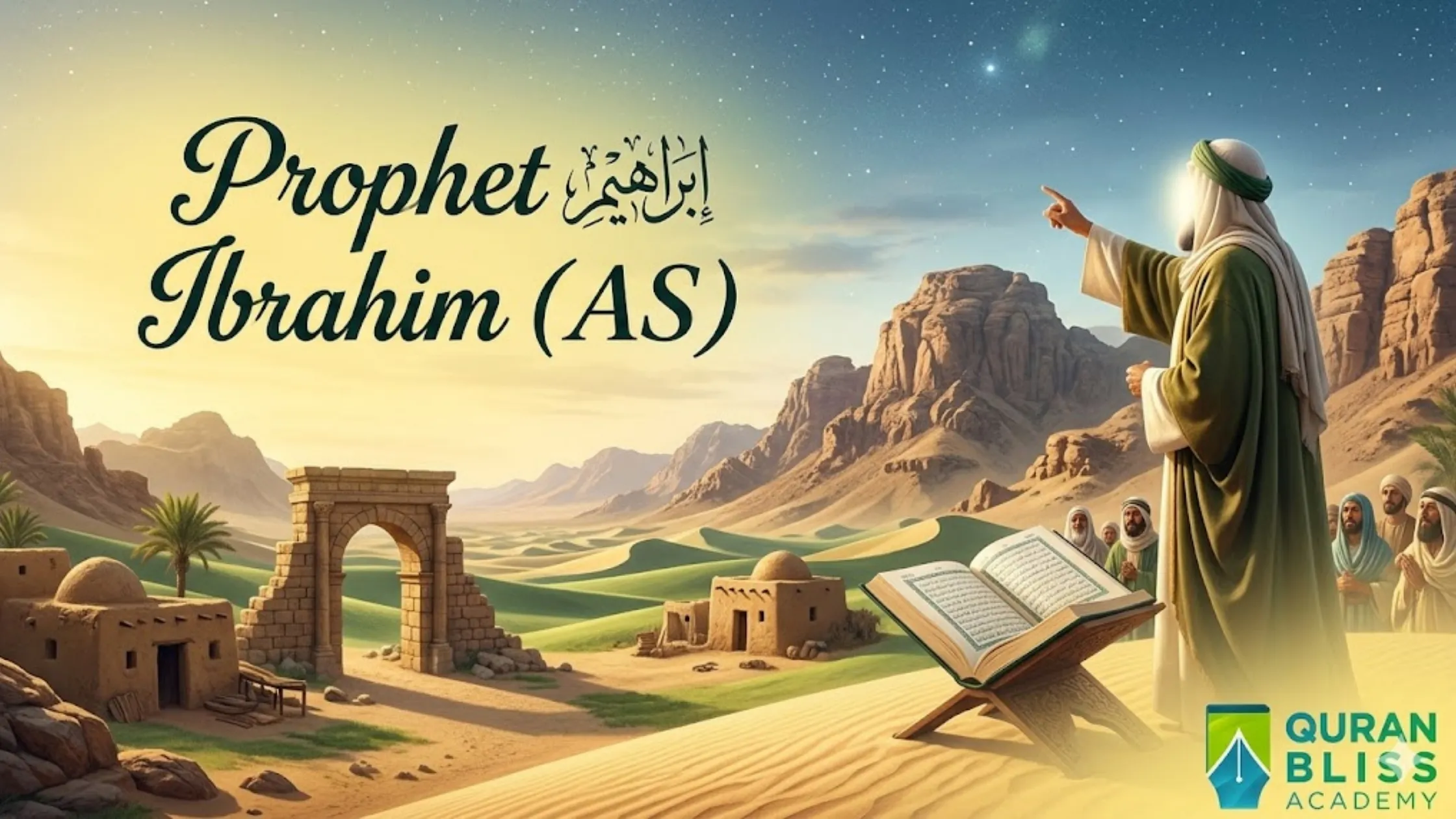
Unlike those around him, Ibrahim never accepted idol worship at face value. From an early age, he observed how people prayed to statues that could not see, hear, or speak. This natural reasoning, a gift from Allah, led him to reject idolatry long before any revelation came to him directly. His journey was not rebellion; it was sincere, rational inquiry.
Allah’s Gift of Wisdom and Spiritual Understanding
Allah tells us that He gave Ibrahim his guidance before he reached full maturity:
وَلَقَدْ آتَيْنَا إِبْرَاهِيمَ رُشْدَهُ مِن قَبْلُ وَكُنَّا بِهِ عَالِمِينَ
“And We had certainly given Ibrahim his sound judgement before, and We were knowing of him.”
(Surah Al-Anbiya 21:51)
This divine gift of rational clarity is what distinguished Ibrahim from the start. He did not follow his father’s path blindly , he thought, questioned, and sought the truth.
Ibrahim’s Search for God: A Man Who Questioned the Sky
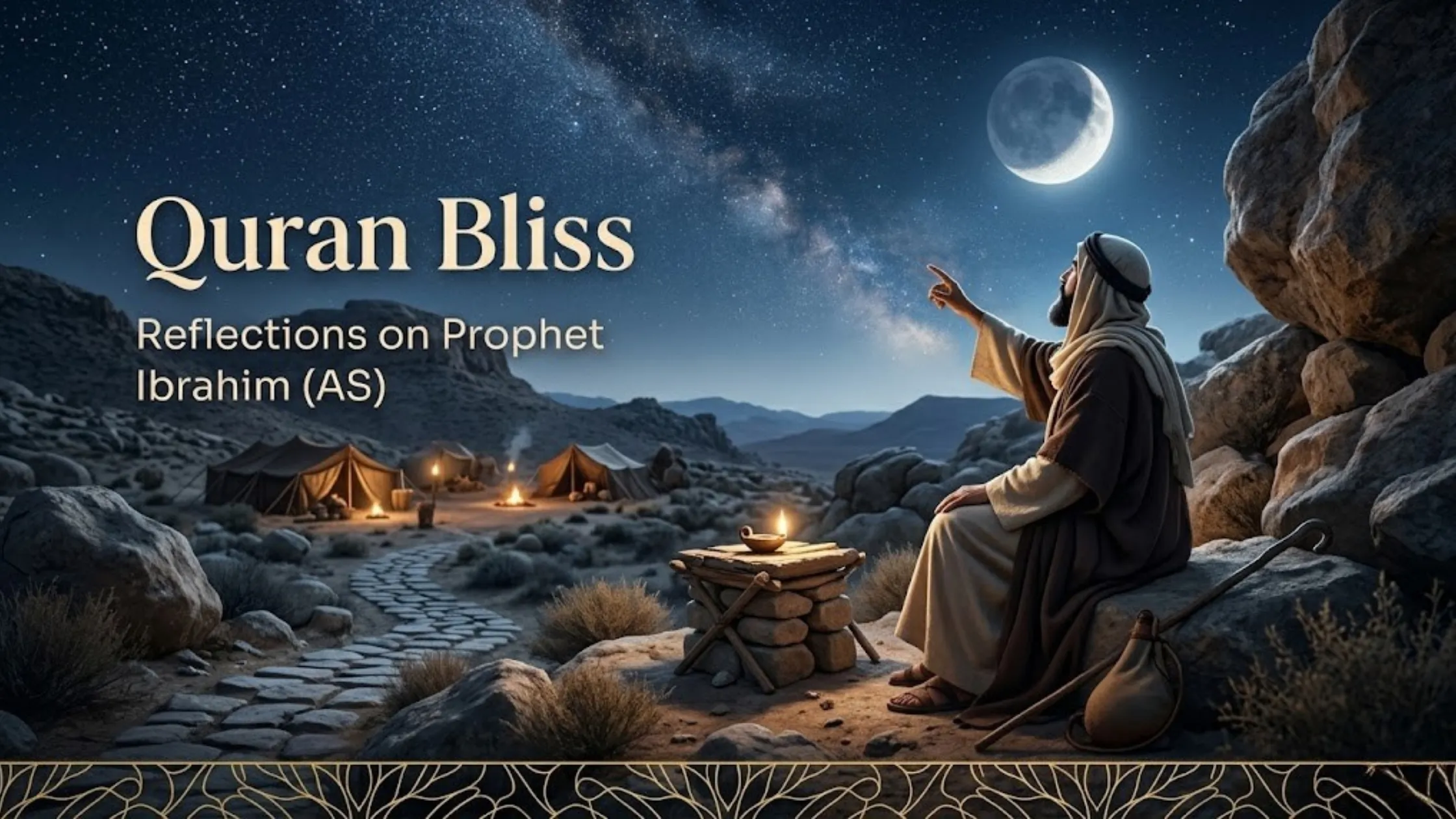
One of the most powerful scenes in the Quran is Ibrahim’s public search for God. He looked at the stars, then the moon, then the sun , not because he worshipped them, but to demonstrate through logic that none of them could be God:
فَلَمَّا جَنَّ عَلَيْهِ اللَّيْلُ رَأَىٰ كَوْكَبًا ۖ قَالَ هَٰذَا رَبِّي ۖ فَلَمَّا أَفَلَ قَالَ لَا أُحِبُّ الْآفِلِينَ
“So when the night covered him [with darkness], he saw a star. He said: This is my Lord. But when it set, he said: I like not those that disappear.”
(Surah Al-An’am 6:76)
He went through the same reasoning with the moon and the sun. When each one set, he declared it unfit to be God. Anything that disappears is dependent , and a dependent being cannot be the Lord of the worlds.
What Is Tawhid in Islam?
After his public demonstration, Ibrahim made his famous declaration that echoes through Islamic theology to this day:
إِنِّي وَجَّهْتُ وَجْهِيَ لِلَّذِي فَطَرَ السَّمَاوَاتِ وَالْأَرْضَ حَنِيفًا ۖ وَمَا أَنَا مِنَ الْمُشْرِكِينَ
“Indeed, I have turned my face toward He who created the heavens and the earth, inclining toward truth, and I am not of those who associate others with Allah.”
(Surah Al-An’am 6:79)
The Story of Prophet Ibrahim and His Father in Islam
His Gentle Dialogue with His Father Azar
Despite his father’s idol worship, Ibrahim never spoke to him with harshness or contempt. He approached Azar with love, gentleness, and repeated invitations to the truth. This is a model of how da’wah (calling to Islam) should be done , with wisdom and beautiful preaching, not arrogance.
Ibrahim said to his father:
يَا أَبَتِ إِنِّي قَدْ جَاءَنِي مِنَ الْعِلْمِ مَا لَمْ يَأْتِكَ فَاتَّبِعْنِي أَهْدِكَ صِرَاطًا سَوِيًّا
“O my father, indeed there has come to me of knowledge that which has not come to you, so follow me; I will guide you to an even path.”
(Surah Maryam 19:43)
The Idol-Breaking Story of Prophet Ibrahim
To prove that idols have no power, Ibrahim waited until the people left for a festival, then went to the temple and destroyed all the idols , except for the largest one, around whose neck he hung an axe. When the people returned in horror, they accused him. Ibrahim pointed to the largest idol: “Perhaps this one did it , ask them, if they can speak.”
The crowd was silenced. They knew their gods could not speak, hear, or act. For a brief moment, the truth hit home , before their pride drove them back to denial. This is one of the boldest acts of da’wah in prophetic history and a cornerstone of the story of Prophet Ibrahim.
The Debate with King Nimrod
When Ibrahim was brought before Nimrod , the arrogant king who claimed divinity , he challenged him with a simple, devastating argument:
قَالَ إِبْرَاهِيمُ فَإِنَّ اللَّهَ يَأْتِي بِالشَّمْسِ مِنَ الْمَشْرِقِ فَأْتِ بِهَا مِنَ الْمَغْرِبِ فَبُهِتَ الَّذِي كَفَرَ
“Ibrahim said: Indeed, Allah brings up the sun from the east, so bring it up from the west. So the disbeliever was overwhelmed [by astonishment].”
(Surah Al-Baqarah 2:258)
Nimrod had no answer. Logic , used with faith , silenced the mightiest king of the era. This is a lesson in how to use wisdom in da’wah.
Why Didn’t the Fire Burn Prophet Ibrahim?
Nimrod’s Punishment and the Great Fire
Enraged by Ibrahim’s destruction of the idols and his public humiliation of Nimrod, the king ordered the greatest fire ever built to be lit, and Ibrahim to be thrown into it. This was not a small fire , narrations describe it as so massive that even birds flying overhead would fall from the heat.
Prophet Ibrahim and the Fire: The Miracle of Be Cool and Peaceful
As Ibrahim was hurled into the fire, Allah gave one of the most remarkable commands in the entire Quran:
قُلْنَا يَا نَارُ كُونِي بَرْدًا وَسَلَامًا عَلَىٰ إِبْرَاهِيمَ
“We said: O fire, be coolness and safety upon Ibrahim.”
(Surah Al-Anbiya 21:69)
The fire, a creation of Allah , obeyed its Creator. Ibrahim walked through the flames unharmed. The very element that should have destroyed him became a place of peace.
A Powerful Lesson in Tawakkul and Faith
This miracle is more than a supernatural event , it is a lesson in Tawakkul (complete trust in Allah). When you have done everything right, stood for truth, and surrendered to Allah, He takes care of the outcome. Your job is not to control the fire. Your job is to trust the One who controls everything.
Lesson from Eid al-Adha story and from this moment: The greatest protection is not to avoid trials , it is to trust Allah within them.
Who Are Prophet Ibrahim’s Family?
Sarah and the Years Without Children
Prophet Ibrahim’s first wife, Sarah, was a woman of great faith and patience. For decades, she and Ibrahim had no children , a profound trial for a prophet whose legacy would shape nations. Yet both of them held on to Allah’s promise. Their patience across those long years is itself a lesson in trusting Allah’s timing.
Angels later visited Ibrahim with the good news of a son, and Sarah , in her old age , laughed in astonishment. This blessed child was Ishaq (Isaac), from whose lineage came the prophets of Bani Israel, including Musa (Moses) and Isa (Jesus).
Hajar and the Birth of Ismail
Ibrahim also married Hajar, who bore him his first son, Ismail (Ishmael). The birth of Ismail was a blessing that came after years of waiting , and with it came one of the greatest tests in prophetic history.
Leaving Hajar & Ismail in the Desert , Trust in Allah
By divine command, Ibrahim was instructed to leave Hajar and the infant Ismail in the barren valley of Mecca , with no people, no water, and no food. As Ibrahim turned to leave, Hajar asked: “Did Allah command you to do this?” He said: Yes. She replied with one of the most powerful statements of Tawakkul: “Then He will not abandon us.”
Her complete trust in Allah was immediately answered.
The Miracle of Zamzam and Sa’y Between Safa & Marwa
As Hajar desperately searched for water for baby Ismail, she ran between the hills of Safa and Marwa seven times. Then , as Ismail’s heel struck the ground , water burst forth from beneath him. This was Zamzam: the well that has never dried in over four thousand years and that millions of pilgrims drink from today.
The ritual of Sa’y , walking between Safa and Marwa seven times during Hajj and Umrah , commemorates Hajar’s desperate search and her unshakeable trust in Allah. Every Muslim who performs Hajj is re-enacting her faith. Want to understand how do you do Hajj? It begins with the legacy of this remarkable woman.
The Story of Building the Kaaba by Prophet Ibrahim (AS)
Ibrahim and Ismail Raise the Foundations
Years later, Ibrahim returned to Mecca and, together with his son Ismail, received the divine command to build the Kaaba , the House of Allah. Father and son lifted the stones together, and as they built, they prayed:
The Famous Du’a of Ibrahim for Mecca and Its People
رَبَّنَا تَقَبَّلْ مِنَّا ۖ إِنَّكَ أَنتَ السَّمِيعُ الْعَلِيمُ
“Our Lord, accept [this] from us. Indeed You are the Hearing, the Knowing.”
(Surah Al-Baqarah 2:127)
Ibrahim then prayed for Mecca and all who would come after:
رَبِّ اجْعَلْ هَٰذَا الْبَلَدَ آمِنًا وَاجْنُبْنِي وَبَنِيَّ أَن نَّعْبُدَ الْأَصْنَامَ
“My Lord, make this city [Mecca] secure and keep me and my sons away from worshipping idols.”
(Surah Ibrahim 14:35)
رَّبَّنَا إِنِّي أَسْكَنتُ مِن ذُرِّيَّتِي بِوَادٍ غَيْرِ ذِي زَرْعٍ عِندَ بَيْتِكَ الْمُحَرَّمِ رَبَّنَا لِيُقِيمُوا الصَّلَاةَ فَاجْعَلْ أَفْئِدَةً مِّنَ النَّاسِ تَهْوِي إِلَيْهِمْ وَارْزُقْهُم مِّنَ الثَّمَرَاتِ لَعَلَّهُمْ يَشْكُرُونَ
“Our Lord, I have settled some of my descendants in an uncultivated valley near Your sacred House, our Lord, that they may establish prayer. So make hearts among the people incline toward them and provide for them from the fruits that they might be grateful.”
(Surah Ibrahim 14:37)
This prayer was answered in full. Mecca became the most visited city on earth. The importance of the 10 days of Dhul Hijjah is directly tied to Ibrahim’s legacy , these sacred days are when millions gather at the Kaaba he built, fulfilling the very du’a he made thousands of years ago.
7. The Story of Prophet Ibrahim’s Sacrifice Dream (Eid al-Adha Story)
The Eid al-Adha story is the pinnacle of Ibrahim’s trials and the most beloved event of the Islamic calendar. It begins with a dream.
The Dream and Ibrahim’s Decision
Ibrahim saw in a dream that he was sacrificing his son. For prophets, dreams are a form of divine revelation. Despite the enormity of the command, Ibrahim did not hesitate. He told his son Ismail what he had seen.
Ismail’s Response , A Son of Faith
قَالَ يَا أَبَتِ افْعَلْ مَا تُؤْمَرُ ۖ سَتَجِدُنِي إِن شَاءَ اللَّهُ مِنَ الصَّابِرِينَ
“He said: O my father, do what you are commanded. You will find me, if Allah wills, of the steadfast.”
(Surah As-Saffat 37:102)
A young man, knowing he was about to be sacrificed, responded with complete submission to Allah. This is what makes the story of Prophet Ibrahim so extraordinary , it was not just one man’s faith, but an entire family’s surrender to Allah.
Allah’s Intervention: The Ram and the Reward
At the moment Ibrahim raised the knife, Allah called out:
وَنَادَيْنَاهُ أَن يَا إِبْرَاهِيمُ قَدْ صَدَّقْتَ الرُّؤْيَا ۚ إِنَّا كَذَٰلِكَ نَجْزِي الْمُحْسِنِينَ
“And We called to him: O Ibrahim, you have fulfilled the vision. Indeed, We thus reward the doers of good.”
(Surah As-Saffat 37:104-105)
A ram was sent from heaven as the sacrifice in Ismail’s place. The test was not about blood , it was about complete surrender. Ibrahim had passed the ultimate exam.
How This Became Eid al-Adha & Qurbani
Every year, on the Day of Arafah 2026 and the days following it , in Dhul Hijjah 2026 , Muslims around the world commemorate this moment. They fast in the blessed days of Dhul Hijjah, perform Qurbani (the sacrifice), and celebrate Eid al-Adha. For those wondering when is Eid al-Adha 2026, it falls on the 10th of Dhul Hijjah, following the Day of Arafah.
The rules for Eid ul-Adha sacrifice trace directly back to this moment: the animal must meet specific conditions, the meat is divided into thirds, and the intention is purely for Allah , not the blood or flesh, but the Taqwa (God-consciousness) that reaches Him.
To understand the full Eid ul-Fitr and Eid ul-Adha difference: Eid ul-Fitr celebrates the completion of Ramadan and its fasting, while Eid ul-Adha honors Ibrahim’s sacrifice and coincides with Hajj.
Prophet Ibrahim’s Du’as in the Quran (A Unique Collection)
One of the most overlooked treasures of Ibrahim’s life is his rich collection of du’as (supplications) preserved in the Quran. These are not just historical prayers , they are words Muslims can recite today.
Du’a for His Father
رَبَّنَا اغْفِرْ لِي وَلِوَالِدَيَّ وَلِلْمُؤْمِنِينَ يَوْمَ يَقُومُ الْحِسَابُ
“Our Lord, forgive me and my parents and the believers the Day the account is established.”
(Surah Ibrahim 14:41)
Even though his father rejected him, Ibrahim prayed for him , until Allah made clear that his father was an enemy of Allah, at which point Ibrahim disassociated from him. This teaches us that love for family does not override loyalty to Allah.
Du’a for Mecca and His Children
رَبِّ اجْعَلْنِي مُقِيمَ الصَّلَاةِ وَمِن ذُرِّيَّتِي ۚ رَبَّنَا وَتَقَبَّلْ دُعَاءِ
“My Lord, make me an establisher of prayer, and [many] from my descendants. Our Lord, and accept my supplication.”
(Surah Ibrahim 14:40)
What Is the Story of the Four Birds in the Du’a of Prophet Ibrahim?
Ibrahim once asked Allah to show him how He gives life to the dead. Allah told him to take four birds, cut them up, place their parts on different mountains, then call them , and they flew back to life. Then Ibrahim was told:
وَاعْلَمْ أَنَّ اللَّهَ عَزِيزٌ حَكِيمٌ
“And know that Allah is Exalted in Might and Wise.”
(Surah Al-Baqarah 2:260)
This du’a and its answer remind us that certainty grows not from arrogance, but from humbly asking Allah to deepen our faith.
Character Traits of Prophet Ibrahim Lessons for Us
The Prophet Ibrahim story lessons are not locked in history , they are a living guide for every believer. Here is a summary of his key traits:
Trait | Example from His Life | Lesson for Us |
Courage | Smashing the idols in the temple | Stand for truth even when you stand alone |
Patience | Decades without children with Sarah | Trust Allah’s timing , His delays are not denials |
Obedience | Preparing to sacrifice his beloved son | Put Allah first, even when it costs everything |
Wisdom | The debate with King Nimrod | Use logic and reason in da’wah |
Tawakkul | Entering the fire without fear | Complete trust in Allah produces miracles |
Gentleness | His repeated kind dialogue with his father | Never be harsh when calling to the truth |
Why Is Ibrahim Called Khalilullah?
The title Khalilullah “intimate friend of Allah”, is mentioned in the Quran:
وَاتَّخَذَ اللَّهُ إِبْرَاهِيمَ خَلِيلًا
“And Allah took Ibrahim as a close friend (Khalil).”
(Surah An-Nisa 4:125)
The Arabic word Khalil goes beyond friendship. It implies a love that has penetrated every fiber of one’s being, a total alignment of heart and will with Allah. It is the highest level of love and closeness a human being can achieve with his Creator.
What earned Ibrahim this title? Every trial he faced, he chose Allah. Fire. Exile. Childlessness. Sacrifice. He was consistent, not in ease, but in the hardest possible moments. This is why the Prophet Muhammad (SAW) said Ibrahim is the best of creation after him, and why Muslims send blessings upon Ibrahim in every single prayer (the Salawat Ibrahimiyyah).
Prophet Ibrahim’s Legacy, Father of Three Religions
Prophet Ibrahim (Abraham) is recognized as the shared patriarch of the three major Abrahamic faiths: Islam, Christianity, and Judaism. Despite the diversity of these traditions, his core message remained one , pure monotheism and the worship of Allah alone. His life laid the spiritual and historical foundation for generations of prophets and believers.
His Legacy Through His Sons:
- Through Ismail (Ishmael):
Ibrahim’s lineage continued among the Arabs. From Ismail came the Adnani Arabs, and ultimately Prophet Muhammad ﷺ. Many central pillars of Islam are directly tied to Ibrahim’s legacy, including:- The Kaaba in Mecca
- The rituals of Hajj
- The direction of prayer (Qiblah)
- Through Ishaq (Isaac):
His second son Ishaq became the father of Ya’qub (Jacob), also known as Israel. From his twelve sons came the Children of Israel and a long line of prophets, including:- Yusuf (Joseph)
- Musa (Moses)
- Dawud (David)
- Sulayman (Solomon)
- Isa (Jesus)
Spiritual Values in Ibrahim’s Legacy:
- Monotheism (Tawheed): Absolute devotion to one God
- Sacrifice & Obedience: Demonstrated in his willingness to submit to Allah’s command
- Charity & Purification: Reflected in practices like Zakah, a core pillar of Islam
- Righteous Leadership: A model for future prophets and nations
Understanding the meaning of Zakah in Islam , one of the five pillars , connects deeply to Ibrahim’s legacy of generosity and spiritual purification. His example continues to inspire acts of worship, including fasting during Dhul Hijjah and devotion in the sacred days connected to Hajj.
Strengthen Your Connection to the Quran with Quran Bliss Academy
The story of Prophet Ibrahim teaches us that true faith is built through knowledge, reflection, and consistent practice. At Quran Bliss Acadmay , we help Muslims of all levels deepen their relationship with the Quran, through online Quran classes, Tajweed lessons, and Islamic studies guided by qualified teachers.
Whether you are a beginner or want to perfect your recitation, our academy offers live, one-on-one sessions tailored to your pace. Explore Quran Bliss today and take the first step toward a Quran-centered life.
The story of Prophet Ibrahim is not merely a historical narrative, it is a manual for faith. From questioning idols as a child to building the Kaaba as a father, from walking through fire to raising the knife in submission, Ibrahim’s every step was a lesson in what it means to love Allah completely.
Frequently Asked Questions About Prophet Ibrahim
Prophet Ibrahim (AS) is known as the father of monotheism, the builder of the Kaaba, and the patriarch of prophethood. He is honoured with the title Khalilullah (Friend of Allah) and is connected to major Islamic rituals including Hajj, Eid al-Adha, and the Salawat recited in every prayer.
Prophet Ibrahim had two sons: Ismail (Ishmael), born to his wife Hajar, and Ishaq (Isaac), born to his wife Sarah. From Ismail came the Arab lineage that led to Prophet Muhammad ﷺ, and from Ishaq came the line of prophets of Bani Israel.
The most famous miracle of Prophet Ibrahim is surviving the great fire unharmed , when Allah commanded the fire to be cool and peaceful upon him. He also witnessed Allah demonstrate the resurrection of the dead through the four birds. The emergence of Zamzam water for his son Ismail is also counted among the miracles connected to his legacy.
Ibrahim is called the father of prophets because nearly all prophets mentioned in the Quran after him were from his descendants. Ismail’s lineage produced Prophet Muhammad ﷺ, while Ishaq’s lineage produced prophets including Ya’qub, Yusuf, Musa, Dawud, Sulayman, and Isa. He is the spiritual and physical ancestor of prophethood.
The story of Prophet Ibrahim teaches us Tawakkul (complete trust in Allah), patience in long trials, courage to stand for truth against society, obedience to Allah above all else, and the power of sincere du’a. His life shows that true faith is not just claimed with words , it is proven through tests, and Allah rewards those who pass with His closeness and honour. What is Prophet Ibrahim known for in Islam?
How many sons did Prophet Ibrahim have?
What miracles did Prophet Ibrahim perform?
Why is Ibrahim called the Father of Prophets?
What does the story of Ibrahim teach us?

Islamic Studies Course
for Adults
Deepen your understanding of Islam’s teachings.
Learn More
The 5 Pillars of Islam
Understand the fundamental principles of Islamic faith and practice.
Learn More