

6 Common Situations When Muslims Say Mashallah
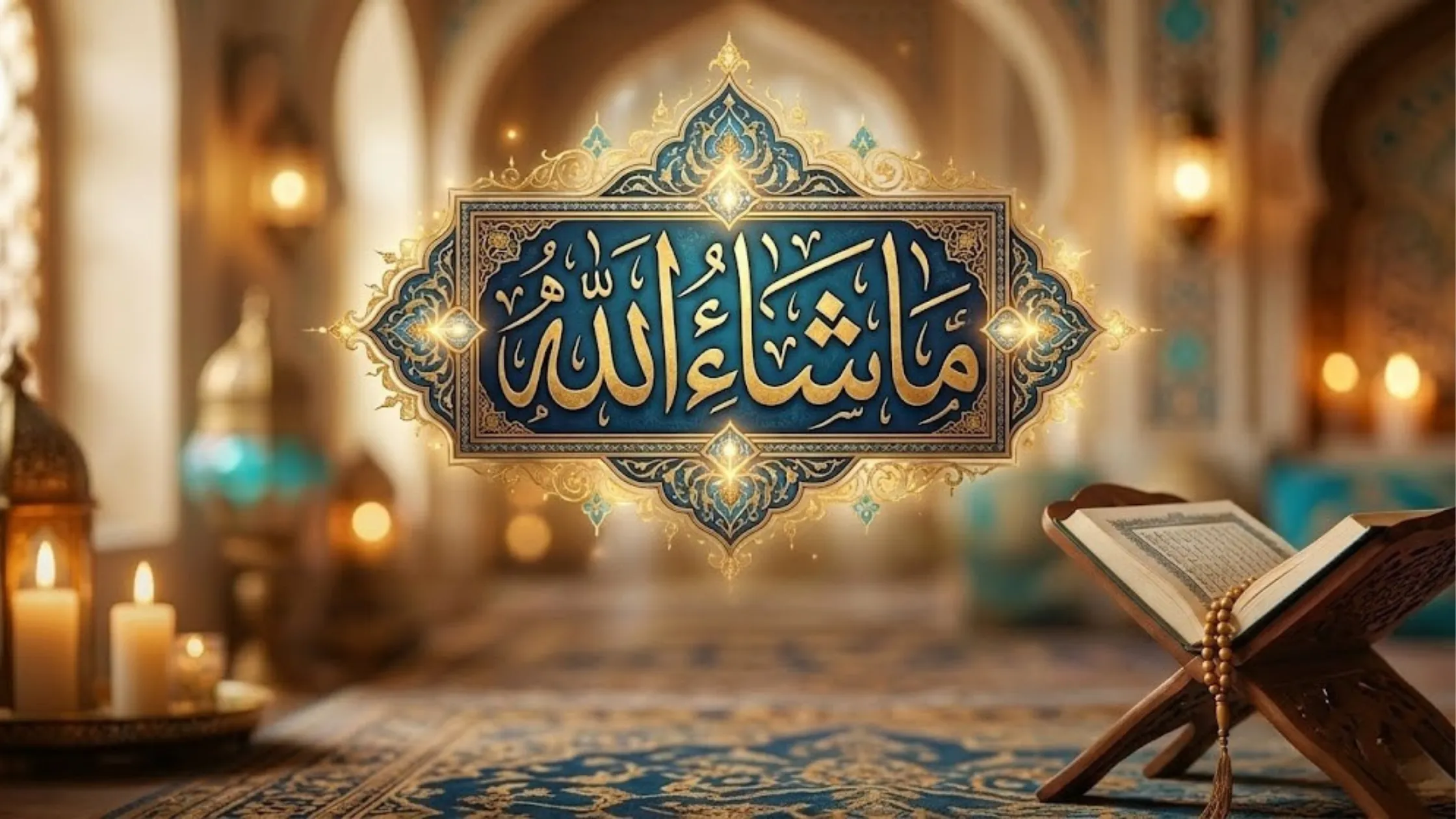
Mashallah (ما شاء الله) is an Arabic phrase that means “What Allah has willed” or “How wonderful is what Allah has willed.” It is said that when admiring something beautiful, praising someone’s achievement, or acknowledging a blessing, it is a reminder that all good things come from Allah alone. It also serves as a spiritual protection against the evil eye (al-‘ayn).
By the end of this article, you’ll know everything, from its Quranic origin to its correct pronunciation and the common mistakes people make when using it.
Understanding the meaning of tajweed in Islam is essential for correctly pronouncing the Arabic words of this phrase and other Quranic verses.
What Does Mashallah Mean? (Word-by-Word Breakdown)
Before diving into when and how to use it, let’s break down the meaning of mashallah at its most fundamental level, word by word.
The Arabic Spelling, ما شاء الله
In Arabic, the phrase is written as ما شاء الله. It consists of three distinct Arabic words joined together in meaning but sometimes written separately. In everyday writing, you’ll often see it as “Mashallah,” “Masha Allah,” or “Ma sha Allah”, all referring to the same expression.
What Each Word Means (Ma / Sha’a / Allah)
- مَا (Ma), a relative pronoun meaning “what” or “that which”
- شَاءَ (Sha’a), a past-tense verb meaning “willed” or “wanted.”
- اللهُ (Allah), the name of God in Islam
Together, the phrase translates literally as “What Allah has willed”, a complete acknowledgment that the beautiful or impressive thing you’re witnessing exists only because Allah permitted it to be so.
The Closest English Translation
There’s no single English equivalent that captures the full depth of the meaning of mashallah. The closest phrase in English would be “How wonderful is what God has willed!” or “God has willed it.” Some people translate it casually as “God has blessed it”, which, while not a literal translation, captures the spirit of admiration and gratitude it conveys.
Mashallah in the Quran, The Origin
- One of the most important things to know about this phrase is that it comes directly from the Quran. It’s not just a cultural habit, it’s a Quranic instruction.
Surah Al-Kahf 18:39, Full Verse & Context
- The phrase appears in Surah Al-Kahf (Chapter 18), verse 39. The context is a parable about two men, one wealthy and arrogant, the other humble and wise. The humble man says to the arrogant one:
وَلَوْلَا إِذْ دَخَلْتَ جَنَّتَكَ قُلْتَ مَا شَاءَ اللَّهُ لَا قُوَّةَ إِلَّا بِاللَّهِ
“And why did you not say, upon entering your garden: ‘Mashallah, there is no power except with Allah.'”
(Surah Al-Kahf, 18:39)
- This verse is the direct Quranic proof that saying Mashallah upon seeing something blessed is not merely a custom, it is a Divinely guided act of remembrance and humility.
What Scholars Say (Ibn Kathir, Al-Qurtubi, Al-Tabari)
Classical Islamic scholars all point to this verse as the basis for saying Mashallah:
- Ibn Kathir explains that the humble man rebukes his companion for entering his garden with pride, without acknowledging that Allah granted him that wealth.
- Al-Qurtubi comments that the verse establishes a Sunnah: whenever one sees something that pleases them, they should say Mashallah to remind themselves that everything belongs to Allah.
- Al-Tabari notes that the phrase serves as a shield against self-delusion and arrogance, a constant reminder that human achievement is only possible through divine will.
Why This Verse Is the Quranic Proof for Saying Mashallah
The verse in Surah Al-Kahf makes it clear: when you witness a blessing, whether it’s your own garden, your child’s talent, or a friend’s success, saying Mashallah is the Islamic response. It keeps the heart connected to Allah and away from pride or envy.
This practice is deeply rooted in the core duties of a Muslim. To see how these expressions align with foundational Islamic practices, you can define the 5 pillars of Islam to better understand the structure of faith.
When to Say Mashallah, 6 Real Situations
Understanding the meaning of mashallah in Islam means knowing exactly when this phrase is appropriate. Here are the six most common and correct situations:
1. Praising Someone’s Achievement
When your friend passes a difficult exam, earns a promotion, or completes a big project, say Mashallah. It expresses genuine admiration while attributing the success to Allah. It’s one of the most beautiful ways to celebrate someone without arrogance or jealousy.
2. Admiring Beauty (People, Places, Things)
Whether you’re looking at a breathtaking landscape, a beautifully decorated home, or a handsome child, Mashallah is the Islamic expression of awe and appreciation. This is particularly important when complimenting people, as it offers protection from the evil eye.
3. Hearing Good News
When someone shares good news, a pregnancy, a new job, or a marriage, Mashallah is one of the most appropriate responses. It shows you’re happy for them and that you recognize Allah as the source of all good things.
4. Looking at a Newborn
Newborns are considered especially vulnerable to the evil eye in Islamic tradition. Saying Mashallah upon seeing a newborn is not just a compliment; it is a spiritual act of protection and a declaration of gratitude to Allah for this new life.
5. Responding to Someone’s Blessing (Home, Car, Success)
When someone shows you their new home, a new car, or shares a business success, this is a prime moment for Mashallah. It acknowledges the blessing while keeping envy at bay, and reminds both the speaker and the listener that it came from Allah.
6. Mashallah as Protection from the Evil Eye (Al-Hasad)
The evil eye, al-‘ayn or al-hasad, is real in Islamic belief, as evidenced by multiple authentic hadiths. Saying Mashallah when admiring something is a practice encouraged by the Prophet to deflect envy. The phrase redirects attention from the person or object back to Allah, removing the ego from the equation.
العَيْنُ حَقٌّ
“The evil eye is real.”
(Sahih Muslim, 2187)
How Do You Respond When Someone Says Mashallah?
When someone says Mashallah to you, whether praising your child, your home, or your work, there are several beautiful Islamic responses:
Jazakallah Khair (جزاك الله خيرًا)
This means “May Allah reward you with goodness.” It’s a warm and gracious response that acknowledges the compliment while making a dua (prayer) for the person who gave it.
Allahumma Barik (اللهم بارك)
This means “O Allah, bless it.” It is actually something the speaker can say together with or instead of Mashallah, and the receiver can repeat it as well, asking Allah to bless the thing being admired.
Tabarakallah (تبارك الله)
This means “Blessed is Allah” or “May Allah bless it.” It’s one of the most common responses to Mashallah and can also be used interchangeably with it in many situations. It reinforces the idea that all blessings come from a blessed and glorified God.
Simple “Thank You”, Is It Okay?
From a social perspective, saying “thank you” is perfectly acceptable, especially in non-Muslim contexts. However, from an Islamic standpoint, responding with a dhikr phrase like Jazakallah Khair or Tabarakallah is more complete; it maintains the spiritual dimension of the exchange.
What’s the Difference Between Mashallah, Inshallah, and Alhamdulillah?
Many people, Muslim and non-Muslim alike, confuse these three phrases. Here’s a clear comparison:
Phrase | Meaning | When to Use |
Mashallah (ما شاء الله) | What Allah has willed / How wonderful is what Allah has willed | Expressing admiration for something beautiful, successful, or blessed that already exists or has happened |
Inshallah (إن شاء الله) | If Allah wills / God willing | Referring to a future event, making plans, or expressing hope for something to happen |
Alhamdulillah (الحمد لله) | All praise is due to Allah / Thank God | Expressing gratitude for a blessing, after completing something, or when asked how you are. Just as Mashallah acknowledges Allah’s will over blessings, the meaning of zakah in Islam also reflects humility by recognizing that our wealth ultimately belongs to Him. |
The key difference:
- Mashallah looks at the present or past (what has already happened).
- Inshallah looks at the future.
- Alhamdulillah is an expression of thanks.
Once you understand this distinction, using each phrase correctly becomes natural.
Can You Say Mashallah Tabarakallah Together?
Yes, and it’s actually highly encouraged! The combination “Mashallah Tabarakallah” (ما شاء الله تبارك الله) is widely used and carries a beautiful, layered meaning.
What Tabarakallah Adds to the Meaning?
While Mashallah acknowledges that the thing exists by Allah’s will, Tabarakallah (Blessed is Allah) adds an explicit glorification of Allah. Together, the phrase becomes: “This is what Allah willed, and how blessed is Allah!” It’s a complete expression of awe, gratitude, and divine acknowledgment.
Is There a Hadith About Saying Both?
Some scholars reference the practice of the Prophet (peace be upon him) and his companions using both phrases together. While there isn’t a single hadith with the exact combined phrase, the practice is supported by the general Islamic encouragement to multiply the remembrance (dhikr) of Allah when witnessing blessings. Many contemporary scholars, such as Sheik Ibn Baz and Sheik Al-Uthaymin, have affirmed that saying both together is correct and praiseworthy.
Common Spellings & Pronunciations
One reason people search for the meaning and pronunciation of mashallah is the wide variety of ways it’s spelled and pronounced across cultures.
Ma sha Allah / Masha Allah / MashAllah / Ma Shaa Allah.
All of these spellings are attempts to transliterate the Arabic ما شاء الله into the Latin alphabet. None is definitively “correct” in English; they’re all accepted. The spelling “Ma Shaa Allah” is considered the closest phonetic representation of the Arabic pronunciation.
How to Pronounce It Correctly (Phonetic Guide)
The correct phonetic pronunciation is: maa-shaa-AL-laah
- مَا (Maa), “maa”, a long ‘a’ sound, like in “car.”
- شَاءَ (Shaa-a), “shaa”, a long ‘sh’ sound followed by a gentle stop (hamza)
- اللهُ (Allah), “AL-laah”, emphasis on the second syllable with a long ‘a’
The common mistake is rushing through it as “masha-LA”; take your time with each syllable, and the phrase carries more weight and meaning.
How It’s Said in Turkish, Urdu, and Persian
- Turkish: “Maşallah”, spelled with a special ‘ş’ character, same pronunciation
- Urdu: “ماشاءاللہ”, read as “Masha Allah” with slight regional accent variations
- Persian/Farsi: “ماشاءالله”, same spelling and similar pronunciation to Arabic
Across all these languages, the core meaning remains the same, a testament to the universal impact of this Quranic phrase.
Because Mashallah is a Quranic instruction, it highlights the importance of recitation of the holy Quran in daily life, ensuring believers stay connected to divine guidance.
Common Mistakes When Using Mashallah

Even well-meaning Muslims sometimes misuse Mashallah. Here are the most serious mistakes to avoid:
Saying It About Future Events (Use Inshallah Instead)
Mashallah is for the present or past, things that already exist or have already happened. If someone says, “I’ll get married next month, Mashallah”, that’s incorrect usage. The right phrase for a future event is Inshallah (if Allah wills). Mixing them up is one of the most common grammatical errors in Islamic speech.
Combining It with Another Person’s Name (Shirk Warning)
Some people say things like “Mashallah, [name of a person or saint] has blessed you.” This is a critical error; Mashallah attributes will and blessing to Allah alone, not to any human being, saint, or other entity. Attributing divine will to anything other than Allah contradicts the tawheed (monotheism) that Mashallah is meant to affirm.
Saying It Without Meaning It
Some people say Mashallah as a reflex, like saying “wow”, without any awareness of its meaning. While it’s still a form of dhikr, the full spiritual benefit comes when you say it mindfully. Every time you say Mashallah, you’re consciously acknowledging Allah’s sovereignty over all that is beautiful and good.
Mashallah in Everyday Life, Real Dialogue Examples
Seeing the mashallah meaning in Islam come alive through real conversations makes it much easier to use correctly. Here are five everyday scenarios:
Example 1, A Child’s Achievement:
Parent: “Your son memorized two new surahs this week!”
Friend: “Mashallah! May Allah make him among the people of the Quran.”
Example 2, A Beautiful Home:
Guest: “Your home is absolutely beautiful!”
Host: “Mashallah Tabarakallah, we’re so grateful to Allah for it.”
Example 3, Good News:
Friend: “I just got accepted to my dream university!”
You: “Mashallah! Congratulations, you worked so hard for this!”
Example 4, Meeting a Newborn:
Visitor: “She’s so tiny and adorable!”
Mother: “Yes, Mashallah, we couldn’t be more grateful.”
Example 5, Praising a Skill:
Colleague: “Your recitation of the Quran is incredible.”
You: “Mashallah, it’s all from Allah’s guidance. I’ve been studying tajweed for years.”
Ready to Deepen Your Connection with the Quran?
Understanding phrases like Mashallah is just the beginning. The Quran is filled with wisdom, guidance, and beautiful expressions that shape how Muslims see the world. Whether you’re a beginner or looking to improve your recitation and understanding, QuranBliss offers structured, supportive learning that fits your life. Explore the
Five Pillars of Islam Online Course and start building the Islamic knowledge that gives phrases like Mashallah their true meaning in your daily life.
Mashallah is more than a compliment; it affirms that all blessings come from Allah. Use it mindfully to stay humble, grateful, and connected, turning moments of admiration into acts of remembrance.
Frequently Asked Questions
Mashallah means (What Allah has willed) or (How wonderful is what Allah has willed.)It’s said when admiring something beautiful, successful, or blessed, as a reminder that all good things come from Allah alone.
Yes. The exact phrase ما شاء الله appears in Surah Al-Kahf (18:39), where Allah recounts the story of two men and highlights the importance of attributing one’s blessings to Allah’s will rather than to oneself.
Yes, non-Muslims can say Mashallah, and many Arabic speakers do so out of cultural habit rather than religious conviction. However, its full spiritual power and meaning are realized when said with genuine belief in Allah’s sovereignty over all blessings.
Mashallah refers to the present or past, something that has already happened or exists. Inshallah refers to the future, something you hope or plan for, expressed with trust in Allah’s will. Use Mashallah when admiring what is; use Inshallah when talking about what might be.
Common Islamic responses include: Jazakallah Khair (may Allah reward you), Tabarakallah (blessed is Allah), or Allahumma Barik (O Allah, bless it). A simple (thank you) is also acceptable in casual settings, though the Islamic responses carry greater spiritual meaning. What does Mashallah mean in English?
Is Mashallah in the Quran?
Can non-Muslims say Mashallah?
What's the difference between Mashallah and Inshallah?
How do you respond to Mashallah?


Islamic Studies Course
for Adults
Deepen your understanding of Islam’s teachings.
Learn More
The 5 Pillars of Islam
Understand the fundamental principles of Islamic faith and practice.
Learn More